XI International Forum 24–25 November 2026 · Moscow, Financial University

A New World Economy: Is It Each One for Themselves?

An international platform of the Financial University for a dialogue between government, business and academia on the new architecture of the world economy and Russia's development strategies.

Participant registration closed on 9 November Department applications — until 30 September.

Until the Forum begins

00days
00hours
00minutes
00seconds

About the Forum

The world economy is entering a period of deep structural transformation

Tariff wars, sanctions, broken production chains, settlements in national currencies. The world economy is becoming more fragmented: protectionism is growing, production chains are being restructured and new financial and trade contours are emerging. The Financial University Forum brings together ministers and entrepreneurs, rectors and students, researchers from thirty countries to discuss the emerging architecture of the world economy and to identify possible development strategies in the new environment.

Financial University Forum

Scale, geography and expert reach

The Forum in numbers

11years

of international expert dialogue

2days

24 and 25 November 2026

30+

participating countries

2,700+

participants annually

Dates

Key dates

until 30 SeptemberApplications for interdisciplinary sessions — to event@fa.ru
until 9 NovemberRegistration is closed
24 NovemberPlenary session and panel discussions
25 NovemberInterdisciplinary sessions

Programme

Forum programme

24 November

Plenary and expert programme

  • Plenary sessionThe central event of the Forum with representatives of government, business, the academic and expert community. The plenary programme includes the award ceremony for the winners of the All-Russian competition "Best Executive Authority in Management Innovation".
  • Panel discussionsExpert discussion of key areas of transformation of the world and Russian economy with Russian and international specialists.

25 November

Interdisciplinary programme

  • Interdisciplinary sessionsConferences, round tables and expert discussions in the research areas of the Financial University faculties and institutes.
  • Regional programmeSession events at the Financial University branches will extend the Forum's geography beyond Moscow.

Business programme • 24 November

Plenary session and panel discussions

The central events of the first day: a plenary session with government representatives and international partners, and panel discussions on key areas.

10:00–12:00 Leningradsky Prospekt, 51, bldg. 1, Nobel Hall

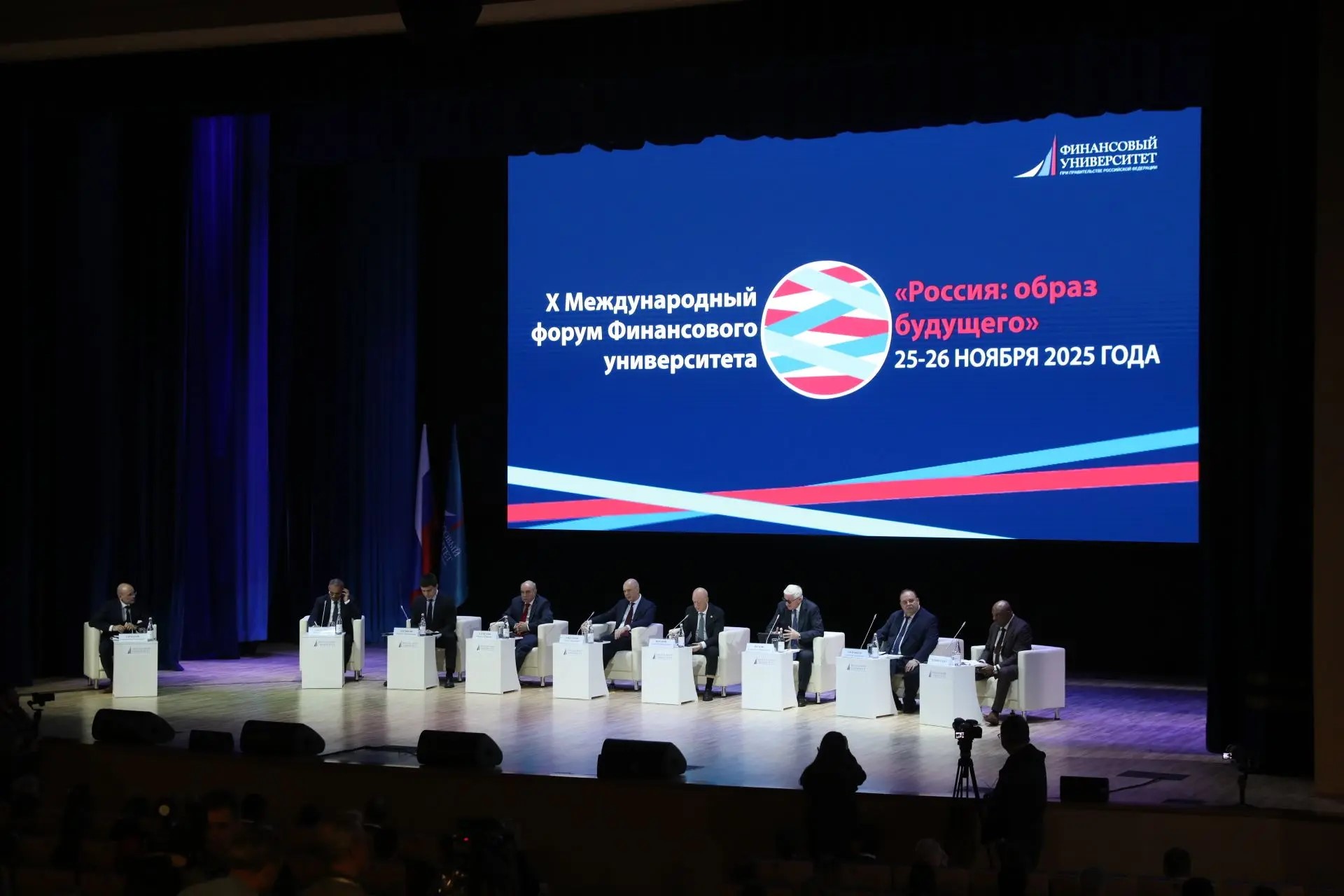
Plenary session "A New World Economy: Is It Each One for Themselves?"

In today's world we observe contradictory trends. On the one hand, the atomisation of politics and the economy seems an obvious phenomenon. Countries actively discuss various types of sovereignty: not only political, but also economic, financial, technological, energy and food.

Sovereignty is above all a bet on one's own strength. Countries no longer seem to believe in the magic of an open global world. They fear deep cooperation and integration because they see how allies once considered reliable betray them (the countries of the Middle East have just experienced this first-hand). Discussion of a future major war has become almost mainstream in leading media — mildly speaking, not the best background for talking about a united world. Familiar logistics chains are collapsing, and the security of financial transactions is being undermined.

On the other hand, the rapid development of technology actually works to "stitch" the world together. For example, platform solutions become effective only when scaled to as many consumers as possible. That is why Russia keeps talking about integration projects; we are an important part of the BRICS agenda and of generating possible principles for the peaceful coexistence of civilisations. The paradox: technologically the world moves towards unity, while politically it is almost preparing for war. The world economy still preserves the interdependence of markets, technologies and capital. But the processes of fragmentation, protectionism and localisation of production are intensifying.

Moderator: Konstantin V. Simonov, Head of the Department of Political Science, Faculty of Social Sciences and Mass Communications, Financial University.

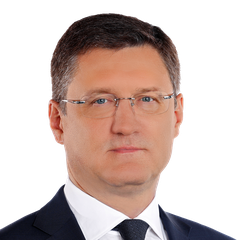
  • Alexander V. Novak
    Alexander V. Novak Deputy Chairman of the Government of the Russian Federation
  • Anton G. Siluanov
    Anton G. Siluanov Deputy Chairman of the Government of the Russian Federation — Minister of Finance of the Russian Federation
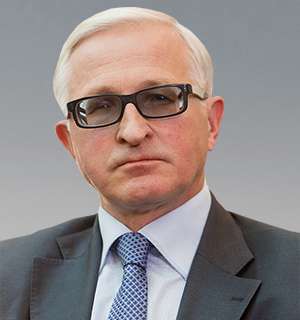
  • Alexander N. Shokhin
    Alexander N. Shokhin Presidential Commissioner for Entrepreneurs' Rights, President of the Russian Union of Industrialists and Entrepreneurs
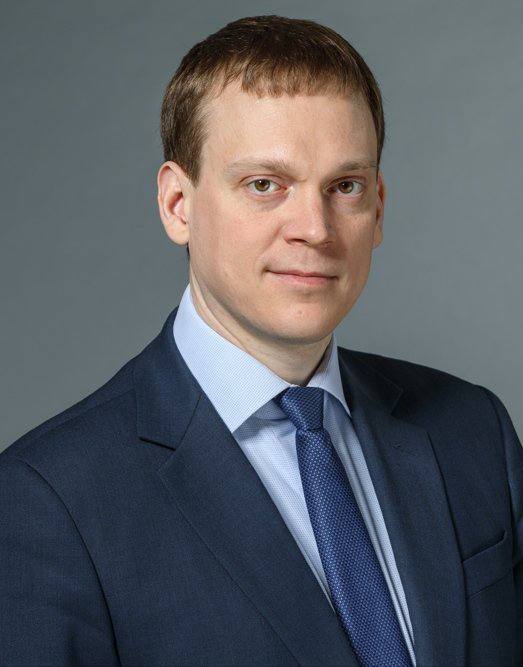
  • Pavel V. Malkov
    Pavel V. Malkov Governor of the Ryazan Region
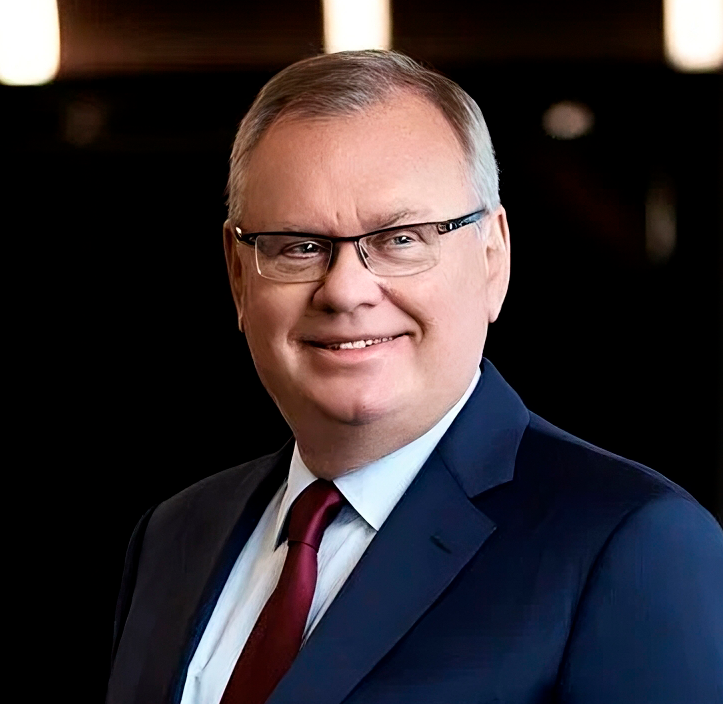
  • Andrey L. Kostin
    Andrey L. Kostin President — Chairman of the Management Board of VTB Bank
  • Stanislav E. Prokofiev
    Stanislav E. Prokofiev Rector of the Financial University
  • Laureano Facundo Ortega Murillo
    Laureano Facundo Ortega Murillo Special Representative of the President of the Republic of Nicaragua for Cooperation with the Russian Federation, Advisor to the President of the Republic of Nicaragua on Investment, Trade and International Cooperation
Discussion questions:
  1. How can one think about ensuring economic growth when everyone is talking about a global war?
  2. How to preserve economic and technological sovereignty without giving up mutual benefit in the era of digital transformation?
  3. How do the autonomy of countries and independent strategies intertwine into the new reality of the global economy?
  4. How is the transformation of the international financial system and the creation of new reserve currencies and payment mechanisms proceeding?
  5. Have regional economic unions become an alternative to global institutions? What is the real role of BRICS in the world economy?
  6. How is the restructuring of global supply chains proceeding and where is Russia's place in it?
  7. How can Russia build a long-term economic growth strategy given growing risks?

The 2026 Financial University Quality of Life Award laureates will be honoured during the plenary session.

14:00–16:00 Leningradsky Prospekt, 51/1, Nobel Hall

New challenges and opportunities for the world economy

“Sooner or later East and West, North and South will have to agree on the principles of a new world order capable of ensuring progress and development of humanity for decades to come.”

V. V. Putin at the plenary session of the XXIII meeting of the Valdai International Discussion Club, 2026.

The alarming trends we observe in the international arena make us think not only about how to arrange world interaction more effectively and fairly in the coming period, but also about adapting these trends to the progressive development of the world economy, preserving global peace and security in conditions where many former legal norms have been discarded and new ones have not yet been developed.

Changes are taking place in all areas: from almost any technology to the social structure of society, from climate to medicine, from the future of energy to demographic change, from universal digitalisation and artificial intelligence to new models of economic development. In other words, a process of qualitative transformation of the entire world community and its basic component — the world economy — is under way. All changes unfold simultaneously, and their impact on society and the state as an institution of regulation is contradictory. The discussion will allow us to consider new challenges and opportunities for the world economy and the Russian economy.

Moderators:

  • Viktoria V. Perskaya, Director of the Institute for Research of International Economic Relations, Financial University;
  • Pavel S. Seleznev, Dean of the Faculty of International Economic Relations, Financial University.

Speakers:

  • Alexander I. Ageev, Director of the Institute for Economic Strategies of the Russian Academy of Sciences, Director General of the International Research Institute for Management Problems (MNIIPU), Director of the Pitirim Sorokin — Nikolai Kondratiev International Institute, President of the International Academy of Future Studies, Head of Department and Professor at the National Research Nuclear University MEPhI, Professor at MGIMO and Lomonosov Moscow State University, Head of the DBA programme "Digital Transformation" of the Singapore Academy of Corporate Management;
  • Akimzhan A. Arupov, Director of the Institute of World Economy and International Relations, Turan University, Republic of Kazakhstan;
  • Vladimir S. Vasiliev, Chief Researcher at the Georgy Arbatov Institute for U.S. and Canada Studies of the Russian Academy of Sciences;
  • Mikhail Yu. Golovnin, Director of the Institute of Economics of the Russian Academy of Sciences;
  • Alexey A. Gromyko, Director of the Institute of Europe of the Russian Academy of Sciences;
  • Ruslan V. Davydov, Advisor to the Director General of the State Atomic Energy Corporation Rosatom;
  • Valery A. Kryukov, Research Supervisor of the Institute of Economics and Industrial Engineering of the Siberian Branch of the Russian Academy of Sciences;
  • Alexey V. Kuznetsov, Director of the Institute of Scientific Information for Social Sciences of the Russian Academy of Sciences;
  • Vladimir D. Milovidov, Deputy Director of IMEMO RAS for Research, Head of the Department of International Finance at MGIMO;
  • Ilkhom T. Nematov, Deputy Secretary General of the CIS, Ambassador Extraordinary and Plenipotentiary of the Republic of Uzbekistan;
  • Andrey N. Spartak, Head of the Department of International Trade and Foreign Trade of the Russian Federation at VAVT of the Ministry of Economic Development of Russia, President (Research Supervisor) of AO VNIKI;
  • Mikhail A. Eskindarov, President of the Financial University.
Discussion questions:
  1. Evolution of economic globalisation and the formation of economic centres of the world economy.
  2. Transformation of the international multilateral trading system: from neo-protectionism to fair world trade.
  3. Ecology and energy in ensuring sustainable economic development.
  4. Multipolarity in the global monetary and financial system.
  5. Artificial intelligence: a challenge or an opportunity for the development of the world economy?
14:00–16:00 Leningradsky Prospekt, 51/1, room 1006 together with the Executive Committee of the CIS Coordinating Transport Meeting

Transport and economic corridors in the Commonwealth of Independent States and Greater Eurasia

In modern conditions, the development of cooperation in transport and logistics and the provision of reliable supply chains is one of the key conditions for ensuring the stability of the economy.

All CIS member states have faced unprecedented challenges in politics and the economy, which have led to a significant change in the transport and logistics landscape in Eurasia. At the same time, a time of opportunities has come: establishing new ties, entering new markets, introducing new promising technologies.

At the same time, the infrastructure of international transport corridors — communication routes, logistics facilities, sea and dry ports, and the services provided with their help — must continuously develop, creating conditions for strengthening the connectivity of territories, increasing industrial production and improving the well-being of the population. In this regard, only an integration-oriented dialogue between public authorities, transport and logistics companies, and the expert and academic community will allow using the potential of cooperation between various sectors of the economies of the Commonwealth countries and Greater Eurasia as a whole. Only the integrated development of transport and logistics systems in conjunction with regional, industrial and agro-industrial development projects will allow creating new alliances and implementing promising joint projects, forming new points of economic growth.

Moderator: Gennady I. Bessonov, Chairman of the Executive Committee of the CIS Coordinating Transport Meeting (Minister).

Speakers:

  • Fyodor I. Arzhaev, Leading Researcher at the Institute for Research of International Economic Relations, Financial University;
  • Dmitry A. Birichevsky, Director of the Department of Economic Cooperation of the Ministry of Foreign Affairs of the Russian Federation;
  • Tatiana V. Gorovaya, First Vice-President of the Centre for Strategic Research Foundation;
  • Alevtina G. Kirillova, Director General of ANO Eurasian Agro-Logistics;
  • Oleg Yu. Kobyakov, Director of the Liaison Office for the Russian Federation of the Food and Agriculture Organization of the United Nations (FAO);
  • Arzybek O. Kozhoshev, Member of the Board (Minister) for Energy and Infrastructure of the Eurasian Economic Commission;
  • Vladimir V. Kosoy, President of the Centre for Infrastructure Economics;
  • Tural N. Mamedov, Leading Researcher at the Institute for Research of International Economic Relations, Financial University;
  • Mikhail E. Myskin, Director of the Department of Economic Cooperation of the Executive Committee of the Commonwealth of Independent States;
  • Anna S. Sinitsyna, Associate Professor of the Department of Logistics Systems and Technologies at the Russian University of Transport (MIIT);
  • Pavel V. Sokolov, Director General of AO SmartLog;
  • Pyotr I. Tolmachev, Professor of the Department of World Economy at MGIMO;
  • Alexander M. Sharov, Director General of the RusIranExpo Group;
  • Yury A. Shcherbanin, Head of the Laboratory for Analysis and Forecasting of Transport and Logistics Systems of the Institute of Economic Forecasting of the Russian Academy of Sciences.

The discussion will be attended by representatives of the Ministry of Transport of the Russian Federation, the Embassy of Turkmenistan in the Russian Federation, the Ministry of Territorial Development and Infrastructure of the Republic of Armenia, the Ministry of Transport and Communications of the Republic of Belarus, the Ministry of Transport of the Republic of Kazakhstan, the Ministry of Transport and Communications of the Kyrgyz Republic, the Ministry of Transport of the Republic of Tajikistan, and the Ministry of Transport of the Republic of Uzbekistan.

Discussion questions:
  1. How do we see the development of international transport communications in the CIS space?
  2. New initiatives for the development of Greater Eurasian ITCs.
  3. Ways to eliminate barriers in the implementation of ITCs in modern conditions.
  4. The potential of intersectoral cooperation and interregional cooperation of the Commonwealth countries to ensure transport connectivity.
14:00–16:00 Leningradsky Prospekt, 49/2, Grand Hall

Innovation in public and municipal administration: solutions that bring us together

Management innovations help make the interaction of the state with users of its services — citizens, businesses and organisations — more understandable, convenient and effective. Their value is determined by how much new approaches change the daily work of government bodies, take into account the needs of users and help solve their problems.

The discussion will focus on new ways of organising the work of state and municipal authorities, interagency interaction and feedback, and the use of data and digital tools for decision-making. Participants will discuss how these approaches help improve the quality of services, simplify procedures for citizens and businesses and build cooperation with organisations. Special attention will be paid to the novelty of management decisions, evaluation of their effect and the conditions for applying successful experience in other regions and municipalities.

Within the framework of the event, diplomas will be awarded to the winners of the III All-Russian competition "Best Executive Authority in Management Innovation", as well as the Financial University Prize in the field of quality of life. The competition practices will become the basis for a conversation about how initiatives of individual teams can change the management system and create new opportunities for cooperation.

Moderator: Gulnaz M. Kadyrova, Dean of the Graduate School of Management, Financial University.

Speakers:

  • Valery D. Dzgoev, Director of the Centre for Innovation in Public and Municipal Administration;
  • Stanislav E. Prokofiev, Rector of the Financial University;
  • heads of project teams and representatives of authorities — winners of the III All-Russian competition "Best Executive Authority in Management Innovation".

The discussion will involve representatives of the Ministry of Digital Development of Russia, the Ministry of Agriculture of Russia, the Federal Treasury, the Moscow Department of Finance, and regional and local executive authorities.

The discussion will include:

Presentation of diplomas to the winners of the III All-Russian competition "Best Executive Authority in Management Innovation".

Discussion questions:
  1. What new management approaches help bring authorities and users of services — citizens, businesses and organisations — closer together?
  2. How to build interagency interaction and feedback with users in order to improve the quality of services and simplify procedures?
  3. How do data and digital tools change management processes and the quality of decisions made?
  4. How to evaluate the novelty and results of management practice and transfer successful experience to other regions and municipalities?
14:00–16:00 Leningradsky Prospekt, 49/2, room 214

From warehouse to ecosystems: logistics transformation in the era of digital platforms

E-commerce logistics is undergoing rapid transformation. New challenges for warehouse infrastructure, the development of distributed logistics models and the emergence of new formats for storing, receiving and processing orders are changing the architecture of the market. Along with large distribution centres, partner warehouses, micro-hubs and local formats for storing goods are developing. A special role in these processes is played by order pickup points (OPPs), which are gradually going beyond their usual functions and becoming multifunctional elements of the logistics infrastructure of digital platforms.

Participants in the panel discussion will discuss the prospects for the transformation of warehouse and logistics infrastructure, new models of interaction between digital platforms and entrepreneurs, increasing labour productivity and financial sustainability of OPPs, as well as the possibilities of forming a universal e-commerce infrastructure.

Within the framework of the panel discussion, the Association of E-Commerce Market Participants will present the results of an industry study on the transformation of order pickup points. Its findings will become the basis for discussing the further development of the industry and finding practical solutions with the participation of leading digital platforms.

Moderators:

  • Evgenia N. Chernitskaya, Chair of the Association of E-Commerce Market Participants (AUREC);
  • Olga N. Zhiltsova, Associate Professor of the Department of Logistics, Faculty of Economics and Business, Financial University.

Speakers:

  • Anton V. Budanitsky, Advisor of the Department for Assessment of Industry and Regional Risks of the Risk Assessment Directorate of the Federal Service for Financial Monitoring;
  • Nikolay A. Velichko, Head of the FBW RWB direction;
  • Mikhail L. Grafchikov, Director of the Directorate for Network Development and Project Management, Russian Post;
  • Andrey V. Dzhangiryan, Advisor to the Deputy Director General of Russian Railways, member of the RSPP Committee on International Cooperation;
  • Artyom V. Dolgikh, Business Development Director, Akselot-L LLC;
  • Irina I. Zilberberg, Head of the ABD Department, Avito;
  • Tatiana A. Ilyushnikova, Deputy Minister of Economic Development of the Russian Federation;
  • Elina Yu. Klimenko, Deputy Director General of the Moscow Innovation Cluster Foundation;
  • Nikita V. Kuznetsov, Director of the Department for Domestic Trade Development, Ministry of Industry and Trade of the Russian Federation;
  • Yulia N. Sukach, Owner of an OPP network, Co-Chair of the Association of E-Commerce Market Participants (AUREC);
  • Mukhamed A. Khamukov, Director for Strategic Partnerships, Ozon.

The discussion will be attended by representatives of the logistics business, the Chamber of Commerce and Industry of the Russian Federation, Rosfinmonitoring, representatives of the International Logistics Club, the expert and academic community.

Discussion questions:
  1. How will the architecture of warehouse infrastructure change and what new storage formats will be in demand by digital platforms?
  2. Can an OPP turn into a universal logistics hub combining order pickup, acceptance of goods from sellers, processing of returns and local storage?
  3. Is the multi-brand model capable of increasing labour productivity and business profitability?
  4. Are digital platforms ready for shared use of infrastructure?
  5. What technological, economic and regulatory barriers hinder the development of new formats?
14:00–16:00 Leningradsky Prospekt, 49/2, room 406 together with RIAC

A new world: is there an alternative to grand chaos and global war?

The transformation of the world order, the crisis of international security, hybrid wars, the clash of values and the rapid development of AI form new global risks. The modern world stands on the brink of disruption: on the one hand, powerful forces of integration, technological breakthroughs and new opportunities for cooperation, and on the other — growing polarisation, distrust between states, forceful forms of rivalry and a tendency towards increasing hostility. More and more hotbeds of tension are emerging in the world, local wars are breaking out that acquire the character of protracted hostilities.

In world politics, most countries advocate strengthening the basic principles of international law and establishing a just world order based on equal and indivisible security. The countries of the "collective West" seek to preserve hegemony by imposing their policy of a "rules-based world". Meanwhile, the "redivision of the world" hides a rigid redistribution of influence, where technological superiority, military power and the resource base become the main arguments of key players claiming the status of great powers in the new world order.

Wars are waged not only on battlefields — the information environment and the cognitive sphere have become an equally significant front. Hostile propaganda, "memory wars", fake news, information manipulation, agent networks and algorithmic amplification are capable of splitting societies of "target countries" from within. The value differences of countries have long been tried to be "smoothed out" through the "universal standards" of liberal democracy, marking the "end of history". In reality, traditional and modernist values can be both resources for development and sources of degradation: their clash generates rejection, leads to demarcation and results in a split in society.

At the same time, information technologies are rapidly changing the balance of power: global corporations, digital communications, and artificial intelligence form new centres of control, influence and capital extraction. The coming "brave new world" of comfortable life turns into a "digital panopticon" that shapes human behaviour and utilises the time of humanity. The question of whether a meaningful alternative to sliding into large-scale chaos and the risk of unleashing a global war is possible has ceased to be abstract.

Moderator: Vladimir L. Shapovalov, Member of the Public Chamber of the Russian Federation, Project Head of the Department for Interaction with the Expert Community of ANO "Expert Institute for Social Research" (EISI), Associate Professor of the Department of Comparative Political Science at MGIMO.

Speakers:

  • Elena V. Brodovskaya, Chief Researcher at the Institute of Humanitarian Technologies and Social Engineering, Professor of the Department of Political Science, Faculty of Social Sciences and Mass Communications, Financial University;
  • Natalia V. Burlinova, President of ANO "Centre for Support and Development of Public Initiatives — Creative Diplomacy";
  • Pavel V. Danilin, Director General of ANO "Centre for Political Analysis and Social Research";
  • Anna Yu. Dombrovskaya, Professor of the Department of Political Science, Director of the Centre for Political Research, Chief Researcher at the Institute of Humanitarian Technologies and Social Engineering, Faculty of Social Sciences and Mass Communications, Financial University;
  • Farhad E. Ibragimov, expert and lecturer at the Faculty of Economics of RUDN University (Republic of Azerbaijan);
  • Alexander K. Kamkin, international relations expert, Associate Professor of the Department of Political Science, Faculty of Social Sciences and Mass Communications, Financial University;
  • Adrian Garcia Lucas, Vice-President of the Centre for Integration and Cooperation between Russia and Latin America (Argentine Republic);
  • Alexey Yu. Mamichev, Professor of the Department of Russian Politics, Faculty of Political Science, Head of the Laboratory of Political and Legal Research, Lomonosov Moscow State University;
  • Evgenia V. Makhmutova, international relations expert, Associate Professor of the Department of Political Science, Faculty of Social Sciences and Mass Communications, Financial University;
  • Alexander O. Naumov, Professor of the Department of International Organisations and Global Governance, Faculty of Public Administration, Lomonosov Moscow State University;
  • Nikolay P. Parkhitko, Associate Professor of the Department of Theory and History of Journalism at RUDN University, Associate Professor of the Department of Political Science, Faculty of Social Sciences and Mass Communications, Financial University;
  • Meshkin Danial Ranjbar, RIAC and Valdai Club expert, Associate Professor of the Department of Theory and History of International Relations, RUDN University (Islamic Republic of Iran);
  • Igor I. Kuznetsov, Professor of the Department of History and Theory of Politics, Faculty of Political Science, Lomonosov Moscow State University;
  • Alexey A. Martynov, Director of the International Institute of Newest States;
  • Oleg A. Matveychev, Deputy of the State Duma of the Federal Assembly of the Russian Federation;
  • Miroslav Mladenovich, Professor of the Faculty of Security Studies, University of Belgrade (Republic of Serbia);
  • Olga V. Rogach, Director of the Institute of Humanitarian Technologies and Social Engineering, Faculty of Social Sciences and Mass Communications, Financial University;
  • Konstantin V. Simonov, Head of the Department of Political Science, Faculty of Social Sciences and Mass Communications, Financial University;
  • Ivan N. Timofeev, Director General of the Russian International Affairs Council (RIAC);
  • Marijana Shundich, Editor-in-Chief of the socio-political online publication "Vesnik" (Montenegro).

The discussion will be attended by representatives of the Russian International Affairs Council (RIAC), the Expert Institute for Social Research (EISI), and MGIMO.

Discussion questions:
  1. Rearrangement of the world order or redivision of the world order: what is happening in the international arena and what will it lead to?
  2. "Rules-based world" or "multipolar world": which model of international order is capable of ensuring global security?
  3. Hybrid, information, cognitive wars: is it possible to build "world peace" in an atmosphere of hostility, hatred and fakes of Western propaganda?
  4. Traditional and modernist values: resources for economic development, instruments of political mobilisation, or subjects of public discord?
  5. "Brave new world" vs terrible "digital panopticon": who will rule — state institutions, technology corporations, artificial intelligence?
14:00–16:00 Leningradsky Prospekt, 49/2, Situation Centre together with the VCIOM Analytical Centre

Artificial intelligence and people's financial behaviour

Artificial intelligence is changing the way people think about managing their money. More and more financial tasks can be handled with neural networks and generative services: planning a budget, choosing savings instruments, assessing loan terms and exploring investment opportunities. Personal financial assistants are becoming available to a broad audience, creating opportunities for more informed personal financial management. But are people ready to entrust their well-being and future to digital algorithms?

The spread of AI in finance depends on users' trust, experience and willingness to delegate decisions. Errors in recommendations, opaque algorithms, cyber-fraud threats and the risk of losing personal autonomy create a need for clear rules and safeguards. At the same time, differences in financial literacy and access to AI services may become a source of new forms of social inequality.

How is AI transforming people's consumer, savings and investment strategies? Where is the line between assistance in decision-making and handing over control of personal finances? What conditions are needed to establish well-founded trust in AI, and who should be accountable for the consequences of its recommendations?

Moderator: Valery V. Fedorov, Dean of the Faculty of Social Sciences and Mass Communications, Financial University, Director General of the VCIOM Analytical Centre.

Speakers:

  • Alexander N. Asafov, Deputy of the State Duma of the Federal Assembly of the Russian Federation;
  • Maria A. Gagarina, Professor at the Department of Psychology and Human Capital Development, Chief Researcher at the Institute of Humanitarian Technologies and Social Engineering, Financial University;
  • Ivan V. Golovanov, Finance and Investment Expert, Founder of the Multiplier Club;
  • Stepan V. Lvov, Associate Professor at the Department of Sociology, Financial University, Chair of the Academic Council of the VCIOM Analytical Centre;
  • Dmitry I. Markov, Senior Lecturer at the Department of Sociology, Financial University;
  • Olga V. Medyanik, Leading Researcher and Deputy Academic Director of the Laboratory of Modern Financial Technologies, Saint Petersburg State University;
  • Timofey A. Nestik, Leading Researcher at the Department of Personality Psychology, Lomonosov Moscow State University, Head of the Laboratory of Social and Economic Psychology, Institute of Psychology of the Russian Academy of Sciences;
  • Stanislav G. Pashkov, Associate Professor at the Department of Economic Sociology, HSE University;
  • Svetlana Yu. Pertseva, Head of the Department of International Financial Technologies and Innovation, MGIMO University;
  • Anna A. Suchilina, Deputy Dean of the Faculty of Social Sciences and Mass Communications, Financial University, Deputy Director of the Institute of Social Architecture of the “Russia — Land of Opportunity” platform;
  • Ruslan G. Yusufov, Head of the Department of Social Forecasting and Modelling, Institute of Social Architecture of the “Russia — Land of Opportunity” platform, Managing Partner of MINDSMITH.
Discussion questions:
  1. How does artificial intelligence transform people's everyday financial strategies, from budget planning to investment?
  2. Where is the line between an “assistant in decision-making” and “handing over control” of personal finances?
  3. What conditions are needed to ensure that trust in AI-powered financial recommendations is well-founded?
  4. Who should be responsible for the consequences of AI financial recommendations, and what user-protection mechanisms need to be established?
  5. Could the spread of AI in finance exacerbate social inequality, and what should be done to mitigate its negative effects?

Business programme • 25 November

Interdisciplinary programme

Conferences, round tables and expert discussions in the research areas of the Financial University faculties and institutes.

11:00–13:00 Maly Zlatoustinsky Lane, 7, bldg. 1, Assembly Hall

International research and practice conference “New trends in the development of national financial systems: moving towards a new form of autarky amid global interdependence”

The current stage of development of the global financial system is characterised by growing disintegration processes, fragmentation of cross-border capital flows, the breakdown of established liquidity chains and changes in the role of financial institutions. Under these conditions, the key imperative for national economies is to preserve and strengthen financial sovereignty while simultaneously searching for new models of interaction with external counterparties.

The conference will consider key trends, conceptual and applied aspects of the transformation of national financial systems under the influence of geoeconomic shifts. Particular attention will be paid to adapting monetary, fiscal and exchange rate policy to conditions of restricted access to traditional capital markets and payment infrastructure, as well as to the formation of alternative mechanisms of regional financial cooperation.

The goal of the event is to develop new strategic approaches for participants in the global financial system that allow minimising the risks of global fragmentation and ensuring long-term sustainable development in a multipolar world.

Moderator: Valeria V. Litvin, Director of the Institute for Financial Research, Faculty of Finance, Financial University, Associate Professor of the Department of Banking and Monetary Regulation.

Speakers:

Join online
  • Tatiana O. Berman, Managing Director of the Department of Investment and Insurance Products, GPB Bank (JSC);
  • Maria S. Burtseva, Chief Risk Analyst of the Underwriting Department, VTB Bank (PJSC);
  • Tatiana A. Verezubova, Head of the Department of Finance, Belarus State Economic University (Republic of Belarus);
  • Sergey V. Vereykin, President — Chairman of the Board of the ROSINKAS Association, Chairman of the Supervisory Board of RNKO R-INKAS;
  • Alexey Yu. Gorislavets, Deputy Chairman of the National Monetary Union;
  • Evgeny A. Dombrovsky, Director of the Department of Budget Policy and Strategic Planning of the Ministry of Finance of Russia, Associate Professor of the Department of Public Finance, Financial University;
  • Hoang Xuan Que, Dean of the Faculty of Banking and Finance, National Economics University;
  • Alexander A. Tsyganov, Head of the Department of Insurance and Social Sphere Economics, Faculty of Finance, Financial University.
Discussion questions:
  1. What are the trajectories of development of national financial systems in the modern world economy?
  2. What are the main advantages and threats of orienting national financial systems towards their own resource capabilities?
  3. How high is the probability of destabilisation of the financial systems of Russia and friendly states under external shocks?
  4. Is financial autarky possible within national economies in the new geopolitical reality?
14:00–16:00 Maly Zlatoustinsky Lane, 7, bldg. 1, room 318

International round table “How can the stock market develop amid declining foreign investment?”

Geopolitical factors have led to a radical change in the structure of Russia's balance of payments and in capital flows. Expectations of investment inflows from friendly countries have not yet been met. As a result of the departure of foreign investors, sanctions restrictions and high interest rates, the structure of demand for financial market products is undergoing significant transformation.

There is an acute task of attracting domestic sources of savings for investment in the real sector of the economy. A record number of investors have come to the stock market. What is their motivation, how stable is their interest in the stock market, what determines their behaviour, what are the challenges and risks of such transformation? What role should professional participants, regulators and exchange infrastructure play in attracting long-term investor funds to the market? What is the role of the Russian Treasury in the new conditions?

Moderator: Alexander K. Afanasyev, Professor of the Department of Financial Markets and Financial Engineering, Faculty of Finance, Financial University.

Speakers:

  • Artem S. Zheleznov, Senior Managing Director for Strategic Development, Moscow Exchange;
  • Irina V. Krivosheeva, Director General of Alfa-Capital Management Company;
  • Oksana V. Mashevskaya, Head of the Department of Financial Control, Analysis and Audit, Belarus State University (Republic of Belarus);
  • Andrey V. Nikiforov, Head of the Control and Audit Directorate for Development Institutions and State Assets;
  • Boris B. Rubtsov, Professor of the Department of Financial Markets and Financial Engineering, Financial University;
  • Ivan V. Ryzhikov, Head of the Brokerage Services Department of the Brokerage Division, T-Bank JSC;
  • Yury S. Rylov, Deputy Head of the Financial Market Operations Department of the Interregional Directorate of the Federal Treasury;
  • Alexey V. Timofeev, President of the National Association of Stock Market Participants;
  • Elena A. Fedchenko, Professor of the Department of Financial Control and Treasury Affairs, Financial University;
  • Cholpon A. Nuralieva, Head of the Department of Accounting, Analysis and Audit, KRSU named after B.N. Yeltsin (Kyrgyz Republic);
  • Olga Yu. Shishlyannikova, Director of the Department of Investment Financial Intermediaries, Bank of Russia.
Discussion questions:
  1. Has the potential of domestic demand been exhausted?
  2. What are the sources of new demand in the stock market: bank deposits, large savings, collective funds, pension funds, corporations, state institutions?
  3. What mechanisms are needed to unlock the potential of domestic sources of investment?
  4. Financial market and the public sector: new rules of the game in a world where "each is for themselves".
16:00–19:00 Maly Zlatoustinsky Lane, 7, bldg. 1, room 218

Panel discussion “Autonomy or interdependence of national financial systems amid global turbulence?”

The panel discussion is devoted to the fundamental contradiction between, on the one hand, the aspiration of states for financial sovereignty, the implementation of independent monetary and fiscal policies, the strengthening of state control over the budget process and the national financial system, and, on the other hand, the growing interconnection of economies driven by the need for joint solutions to global financial problems, cross-border capital flows and supranational financial regulation.

A particular catalyst of this contradiction is total digital transformation. On the one hand, Big Data technologies, AI and central bank digital currencies (CBDCs) strengthen sovereign fiscal control. On the other hand, decentralised finance (DeFi), cross-border digital platforms and ecosystems accelerate the globalisation of capital, creating new challenges for national regulators.

Moderators:

Join online
  • Galina S. Panova, Professor of the Department of International Finance, MGIMO;
  • Vadim V. Ponkratov, Director of the Institute for Research of Socio-Economic Transformations and Financial Policy, Financial University.

Speakers:

  • Marina A. Abramova, Head of the Department of Banking and Monetary Regulation, Financial University;
  • Natalia F. Altukhova, Head of the Department of Financial Technologies, Financial University;
  • Andrey A. Blokhin, Chief Researcher at the Institute of Economic Forecasting of the Russian Academy of Sciences, Professor of the Department of Public Finance, Financial University;
  • Irina V. Larionova, Professor of the Department of Banking and Monetary Regulation, Financial University;
  • Irina A. Lukyanova, Professor of the Department of Taxes and Taxation, BSEU (Republic of Belarus);
  • Rustem Kh. Mardanov, Head of the Main Directorate of the Bank of Russia for the Central Federal District;
  • Semyon I. Postnikov, Head of the Department of Budget Policy for Industry, the Agro-Industrial Complex, the Digital Economy and Communications, Ministry of Finance of the Russian Federation;
  • Lyazzat M. Sembieva, Head of the Department of State Audit, L.N. Gumilyov Eurasian National University (Republic of Kazakhstan);
  • Alexander V. Frygin, Head of the Financial Directorate of the Administration of the Shchyolkovo City District, Associate Professor of the Department of Public Finance, Financial University.
Discussion questions:
  1. Financial cooperation with friendly countries within joint projects (BRICS, EAEU, SCO): is there a future?
  2. Transformation of financial systems: challenges and prospects for ensuring investment sufficiency.
  3. Finding ways to resolve the dilemma between financial stability and economic growth under external shocks.
  4. How to achieve a balance of national interests and global obligations in the financial sphere under global turbulence?
11:00–13:00 Kibalchicha St., 1, Academic Council Meeting Hall

Expert panel “Responsible business: from demographic optimisation to global leadership”

Responsible business is a concept that presupposes a balance between commercial interests and social responsibility. Optimising demography is one of the main tasks of business and is implemented through the development of social programmes, support for birth rates and the creation of conditions for long-term sustainability of the population. Using success in demographic and social initiatives helps to strengthen positions on the world stage, which ultimately leads to global leadership.

The aim of the expert session is to find an answer to the question: "How does a strategy based on social values help states and companies reach the global level?"

Moderator: Ekaterina R. Bezsmetrnaya, Dean of the Faculty of Economics and Business, Financial University.

Speakers:

  • Irina N. Voronkevich, Associate Professor of the Department of International Tourism and Hospitality, BSU (Republic of Belarus);
  • Yury S. Gordeev, Deputy Minister of Construction and Housing and Utilities of the Russian Federation;
  • Oleg N. Larin, Professor of the Department of Logistics, Financial University;
  • Irina A. Merkulina, Deputy Dean of the Faculty of Economics and Business for Research, Professor of the Department of Logistics, Financial University;
  • Dmitry A. Tolstoukhov, Chief Economist of the Project Direction, AO Proriv, State Atomic Energy Corporation Rosatom;
  • Anatoly S. Truba, Chief Researcher at the Russian Federal Research Institute of Fisheries and Oceanography (VNIRO);
  • Feng Shixuan, Deputy Dean of the School of International Education, NEUSOFT Information University in Dalian (PRC);
  • Tatiana V. Kharitonova, Associate Professor of the Department of Industry Markets, Financial University.
Discussion questions:
  1. What role does responsible business play in social progress?
  2. How to ensure the implementation of family and youth support programmes and create working conditions that stimulate birth rates and staff retention?
  3. What is the secret of success of global companies implementing demographic, environmental and social projects?
  4. How do innovative models of interaction between business and the state on demographic issues work?
14:00–17:00 Kibalchicha St., 1, room 301

Round table “Corporate finance, valuation and corporate governance in the new world: challenges and development opportunities”

The structural transformation of the Russian economy is taking place under unprecedented challenges that reveal the problems and priority tasks of its development in the new economic reality. Solving the tasks set by the President of Russia in terms of labour productivity growth, increasing the sustainability of Russian companies and addressing social issues should lead to a model of balanced growth.

Understanding the political and economic specifics of today dictates the need to apply new financial and managerial tools, more adapted to new challenges and modernised, aimed at minimising barriers to business growth.

Moderators:

  • Konstantin V. Ordov, Dean of the Graduate School of Finance (Faculty), Plekhanov Russian University of Economics;
  • Lyudmila I. Chernikova, Head of the Department of Corporate Finance and Corporate Governance, Financial University.

Speakers:

  • Zufar A. Ashurov, Professor of the Department of Innovation Management, Tashkent State University of Economics (Republic of Uzbekistan);
  • Bela S. Bataeva, Professor of the Department of Corporate Finance and Corporate Governance, Financial University;
  • Mikhail I. Beshtoev, Director of the Department of Corporate Regulation, Ministry of Economic Development of Russia;
  • Tatiana A. Knyazeva, Director of the Valuation Department, ZAO Russian Valuation;
  • Irina V. Novikova, Head of the Department of Management, Business Technology and Sustainable Development, BSTU (Republic of Belarus);
  • Elena B. Tyutyukina, Professor of the Department of Corporate Finance and Corporate Governance, Financial University;
  • Marina A. Fedotova, Professor of the Department of Corporate Finance and Corporate Governance, Deputy Research Supervisor of the Financial University;
  • Galina I. Khotinskaya, Professor of the Department of Corporate Finance and Corporate Governance, Financial University.
Discussion questions:
  1. Which factors of growth and sustainable development of business finance have the greatest impact on the formation of the new world economy?
  2. What are the directions of development of corporate finance in the new world and what are the tools for their implementation?
  3. What problems and opportunities exist for the development of valuation, expertise and the formation of property value?
  4. What is the key to successful corporate governance under global challenges?
11:00–13:00 Kibalchicha St., 1, bldg. 2, room 201

Discussion panel “The new world economy and the national tourism ecosystem: from clusters to the platform economy”

The new world economy, in which participants increasingly act on the principle of "each for themselves", poses a direct question to the Russian tourism sector: is it possible to form a nationwide integrated tourism ecosystem in conditions where economic agents, regions and service providers act separately and often pursue only their own interests?

The transition to a national tourism ecosystem of a platform type becomes a test of whether it is possible to redirect the logic of the new world economy from fragmentation to coordinated interaction of participants. The Golden Ring national tourist route acts as a pilot site, and the strategic goal is to create an architecture scalable to all macro-regions of Russia.

Without an ecosystem approach approved at the government level, further investment in tourism infrastructure will remain a set of disparate local projects with high costs, low connectivity and no scale effect at the federal level.

Moderator: Veniamin Sh. Kaganov, Head of the Department of Tourism and Hotel Business, Financial University, President of the Association for Financial Literacy Development.

Speakers:

  • Abhishek Rajup, Director of Ancor Defence Integrator Pvt. Ltd (Republic of India);
  • Alexander P. Biba, President of AO GK Kosmos;
  • Georgy R. Grusha, Director of the Department for Implementation of Tourism Projects, Ministry of Economic Development of Russia;
  • Maxim N. Kalabukhov, Deputy Director General for Economics and Investments, AO Corporation Tourism.RF;
  • Artur S. Muradyan, Vice-President of ATOR, Director General of COMPANY SPACE TRAVEL LLC;
  • Anastasia O. Semashko, Deputy Director for Core Activities — Head of the Marketing and External Relations Directorate, NAPR (Republic of Belarus);
  • Khvicha P. Kharchilava, Associate Professor of the Department of Corporate Finance and Corporate Governance, Financial University;
  • Andrey A. Tsemakhovich, First Deputy Director General of AO Kavkaz.RF.
Discussion questions:
  1. How to ensure the transition from state financing to a self-financing ecosystem without additional burden on the budget, and what roles should be played by the ministries overseeing tourism and logistics?
  2. How to ensure unified analytics and digital connectivity while complying with information security requirements and taking into account the needs of low-margin businesses for accessible digital solutions?
  3. How to find a balance between the performance of public law functions, antitrust regulation and economic efficiency when scaling the national tourism ecosystem?
  4. What mechanisms allow reconciling the interests of participants in the tourism and logistics industries, as well as regional and federal authorities, so that the principle of "each for themselves" is replaced by ecosystem cooperation?
11:00–13:00 Verkhnyaya Maslovka St., 15, Assembly Hall

Panel discussion “Bringing the economy out of the shadows: aligning the interests of the state and business in the new world economy”

The "whitewashing" of the economy is acquiring the status of a strategic vector for ensuring economic security and national sovereignty in the context of the world economy's transition to a new multipolar order and the formation of new economic thinking. The panel discussion will consider the modern model of tax administration, including compliance control and digital technologies, to achieve the sustainability of the budget system.

Discussion participants will consider the parameters of voluntary transparency as a competitive advantage, allowing businesses to reduce costs by displacing the shadow sector, which is consistent with the tasks of ensuring financial sovereignty in the face of new global economic challenges.

Moderator: Vadim N. Zasko, Dean of the Faculty of Taxes, Audit and Business Analysis, Financial University.

Speakers:

  • Artem Yu. Kiryanov, Deputy Chairman of the State Duma Committee on Economic Policy;
  • Elena G. Lukash, Professional Accountant of the Republic of Kazakhstan, Tax Consultant of Category I (Republic of Kazakhstan);
  • Sergey V. Razgulin, Member of the RSPP Tax Committee, Deputy Head of the Tax Directorate of Gazprombank (JSC);
  • Vladimir A. Saskov, Director of the Association of Tax Consultants;
  • Dmitry S. Satin, Deputy Head of the Federal Tax Service of Russia;
  • Alisher Kh. Faiziev, Tax Service Adviser of Rank I of the Higher Tax School of the Republic of Uzbekistan.
Discussion questions:
  1. Sustainability of budgets of the budget system in the new world economy: stability of tax conditions or increase in the tax burden?
  2. Digitalisation of tax administration. The tax authority sees everything: a common phrase or an objective basis of modern tax policy?
  3. Tools to counter the shadow sector in the new world economy: the evolution of academic approaches and promising methods.
  4. Digital tools of tax interaction: will an accountant and a tax inspector be needed in 10 years in the new economy?
14:00–16:00 Verkhnyaya Maslovka St., 15, Assembly Hall

Round table “Tax and accounting tools for consolidating participants in economic unions”

The development of economic cooperation between the CIS member states and the EAEU member states increases the importance of tax and accounting-analytical tools for strengthening mutual economic ties. The round table will consider the possibilities of harmonising approaches to tax regulation and administration, increasing the comparability of corporate reporting and improving information exchange.

Participants will discuss the role of taxation, accounting, audit and business analytics in expanding mutual trade, investment interaction and industrial cooperation. Particular attention will be paid to assessing the economic effects of integration, reducing tax barriers and identifying the risks of cross-border activities.

The goal of the round table is to develop scientifically substantiated practical approaches to harmonising the economic interests of states and business, aimed at strengthening cooperation and sustainable development of national economies.

Moderator: Lyubov I. Goncharenko, Professor of the Department of Taxes and Tax Administration, Financial University.

Speakers:

  • Sergey V. Bogachev, Professor of the Department of Taxes and Tax Administration, Financial University;
  • Svetlana A. Gorina, Director General of Audit and Consulting LLC;
  • Lyudmila V. Polezharova, Professor of the Department of Taxes and Tax Administration, Faculty of Taxes, Audit and Business Analysis, Financial University;
  • Ekaterina G. Gospodarik, Head of the Department of Analytical Economics and Econometrics, BSU (Republic of Belarus);
  • Alexey Yu. Nekrasov, Development Director, Legicon-Pravo LLC;
  • Saidmurod J. Zayniddinzoda, Director of the State Institution "Research Economic Institute" of the Ministry of Economic Development and Trade of the Republic of Tajikistan;
  • Olga A. Sinenko, Chief Researcher at the Institute for Research of Socio-Economic Transformations and Financial Policy, Financial University;
  • Elena V. Starovoytova, Deputy Director of the Department for Regulation of Accounting, Financial Reporting and Audit Activity, Ministry of Finance of Russia.
Discussion questions:
  1. What are the priorities and limits of convergence of tax regulation and regulatory requirements for accounting and reporting in the CIS member states and EAEU member states?
  2. Which taxation and tax administration tools contribute to the development of mutual trade, investment and industrial cooperation, reducing tax barriers and risks of double taxation?
  3. How to ensure the comparability and reliability of accounting data, corporate reporting and statistics for the information support of economic interaction between the countries participating in economic unions?
  4. Which models and tools of business analytics allow assessing the effects of integration, forecasting tax revenues and identifying the risks of cross-border activities?
11:00–13:30 Leningradsky Prospekt, 51, bldg. 1, room 1001

2nd International Conference “The impact of fragmentation of the global financial architecture on the formation of new geopolitical blocs”

The fragmentation of the global financial architecture under the influence of geopolitical tension is transforming international monetary and financial relations. Analysis of the factors of destabilisation of the global monetary and financial system, the risks of decoupling between the US and China, the concept of multipolarity and the introduction of digital financial technologies indicate the accelerated formation of competing geoeconomic blocs.

The conference will consider scenarios of the impact of these processes on the world economy and ways to strengthen the financial sovereignty of states in a multipolar world.

Moderator: Pavel S. Seleznev, Dean of the Faculty of International Economic Relations, Financial University.

Speakers:

  • Denis A. Degterev, Chief Researcher at the Centre for Transition Economy Studies, Institute for African Studies of the Russian Academy of Sciences;
  • Evgeny V. Griva, Deputy Trade Representative of the Russian Federation in the Republic of India;
  • Alexey V. Kuznetsov, Professor of the Department of World Economy and World Finance, Financial University;
  • Andrey V. Podoynitsyn, Member of the Board of Directors of AO Specialised Depository Infinitum;
  • Viktor Ya. Pishchik, Professor of the Department of World Economy and World Finance, Financial University;
  • Ivan S. Pyatibratov, Associate Professor of the Department of Political Science, Financial University;
  • Mirzet S. Ramich, Assistant of the Department of Theory and History of International Relations, RUDN University;
  • Kubat K. Rakhimov, Executive Director of the Centre for Strategic Decisions "Applicata" (Kyrgyz Republic);
  • Sergey A. Tolkachev, Professor of the Department of Economic Theory, Financial University.
Discussion questions:
  1. De-dollarisation: between a structural shift and a temporary reaction to sanctions policy.
  2. The Global South under fragmentation: between independent subjectivity and the space of US–China competition.
  3. Digitalisation of monetary and financial relations: an alternative instrument for international settlements or a reproduction of the currency hierarchy?
  4. Development of mechanisms of monetary and financial cooperation of Russia: from the EAEU to BRICS+.
14:00–16:30 Leningradsky Prospekt, 49/2, room 406

International round table “Transformation of Russian–Chinese economic cooperation”

In the context of the formation of a multipolar world order, Russia and China face similar challenges: the need to ensure technological sovereignty, reduce dependence on external technological platforms and create their own standards in critically important industries. The session is devoted to analysing the strategies of the two countries to achieve technological independence and build sustainable innovation ecosystems.

Experts will discuss key areas of bilateral partnership: joint research and development, cooperation in artificial intelligence, semiconductors, quantum technologies and digital infrastructure, as well as the harmonisation of regulatory approaches and technical standards. Particular attention will be paid to the role of BRICS and the SCO as platforms for coordinating the technological strategies of the Global South, the creation of alternative financial and settlement mechanisms, and the training of engineering personnel.

The focus of the discussion is the transition from point import substitution to the construction of full-fledged technological verticals, the integration of national development strategies and the formation of common technological frontiers capable of competing with global leaders.

Moderator: Arasha Bolaev, Vice-President for Scientific, Technological and International Cooperation of the International Academy of Natural Sciences, Chairman of the Department for Scientific, Technological and Economic Cooperation of the Countries of the "One Belt, One Road" Initiative of the MAN, Chairman of the Chinese Scientific Centre of the MAN.

Speakers:

  • Marina A. Amurskaya, Head of the Department of International Business, Faculty of International Economic Relations, Financial University;
  • Anna D. Vasilchenko, Assistant at the Department of International Business, Faculty of International Economic Relations, Financial University;
  • Ekaterina I. Gordeeva, Deputy Head of the Department of International Business, Financial University;
  • Mike Danilovich, Professor of the Business School, Shanghai Dianji University (Kingdom of Sweden);
  • Ivan P. Dunin, Postgraduate Student at the Department of International Business, Financial University, Specialist at the Department of International Development, Roskhim JSC;
  • Radik M. Gafurov, Deputy Director for Development of the Central House of Aviation and Cosmonautics of DOSAAF Russia;
  • Maxim V. Kazanin, Associate Professor of the Department of International Business, Financial University;
  • Lev N. Krasnov, Head of International Projects at the Centre for Macroeconomics and International Projects, Institute of Economics and Transport Development (a subsidiary of Russian Railways);
  • Andrey M. Kulikov, Associate Professor of the Department of Regional Problems of World Politics, Lomonosov Moscow State University, Researcher at the China Department of the Institute of Oriental Studies of the Russian Academy of Sciences;
  • Valeria Yu. Loginova, Deputy Head of Export Sales to Far Abroad (B2B), Cherkizovo Trading House LLC;
  • Valeria S. Minchichova, Associate Professor of the Department of International Business, Faculty of International Economic Relations, Financial University;
  • Olga V. Ignatova, Deputy Head of the Department of International Business, Faculty of International Economic Relations, Financial University;
  • Marina S. Osipova, Vice-President of Ingosstrakh’s International Cooperation Department, researcher at the International Academy of Natural Sciences;
  • Maxim G. Rakhutin, Chair of the Geotechnology and Mining Machinery Section, International Academy of Natural Sciences;
  • Zhao Sihan, Postgraduate Student at the Department of International Business, Financial University.
Discussion questions:
  1. Strategic vectors of technological development of the Russian Federation and the PRC under geopolitical transformation and sanctions restrictions.
  2. Overcoming fragmentary import substitution by building end-to-end research and production verticals.
  3. The potential of multilateral institutions in the processes of decentralisation of the global digital environment and the demarcation of technological platforms.
  4. Cooperation mechanisms: from joint innovation clusters to the creation of sovereign financial and settlement infrastructure.
11:00–14:00 Leningradsky Prospekt, 49/2, room 406

International round table “The new world economy: economic sovereignty and productive self-sufficiency amid global interdependence”

The current stage of development of the world economy increasingly reveals a contradiction between the deepened interdependence of national economies and the desire of states to preserve independence in choosing the priorities of their development. The rupture of familiar economic ties, technological restrictions and changes in the conditions of international exchange bring the issue of economic sovereignty back from the realm of declarations into the sphere of the real reproduction process.

For Russia, it is not about isolation, but about the ability to reproduce the conditions for further socio-economic development. In these conditions, the system-forming role of the state acquires special significance: it determines the directions of structural, scientific, technological and personnel policy in accordance with national economic interests in the context of continuing global economic interdependence.

Moderator: Marina L. Alpidovskaya, Professor of the Department of Economic Theory, Financial University.

Speakers:

  • Dmitry V. Bobrov, Director of the Institute of Socio-Economic Sciences, Head of the Department of Management, Russian State University for the Humanities;
  • Alexey S. Bobrovsky, Director of the Institute for the Study of World Markets;
  • Viktor A. But, Deputy of the State Duma of the Federal Assembly of the Russian Federation;
  • Ladislav Zhak, Member of INSOL EUROPE (Czech Republic);
  • Petr S. Lemeshchenko, Head of the Department of International Political Economy, BSU (Republic of Belarus);
  • Vladimir D. Milovidov, Corresponding Member of the Russian Academy of Sciences, Deputy Director for Research of IMEMO RAS;
  • Yury G. Pavlenko, Chief Researcher of the Sector of Political Economy, Institute of Economics of the Russian Academy of Sciences;
  • Pavel S. Seleznev, Dean of the Faculty of International Economic Relations, Financial University, Professor of the Department of Political Science;
  • Oleg S. Sukharev, Chief Researcher at the Institute of Economics of the Russian Academy of Sciences, Professor at Lomonosov Moscow State University, Editor-in-Chief of the journal "Economics of Science";
  • Mikhail L. Khazin, President of the M. Khazin Foundation for Economic Research.
Discussion questions:
  1. How does the restructuring of world economic ties and the fragmentation of the world economy change the conditions and opportunities for ensuring the economic sovereignty of national states?
  2. What is the reproductive self-sufficiency of a national economy and what are the possibilities and limits of ensuring it under global economic interdependence?
  3. What is the role of the modern state in ensuring the sustainability of national reproduction and overcoming critical dependence on external factors?
  4. How to ensure the reproductive self-sufficiency and economic sovereignty of Russia while maintaining its inclusion in the world economy, and what priorities should determine the national model of sovereign development?
10:00–13:00 Leningradsky Prospekt, 49/2, Situation Centre

International research and practice conference “Technological sovereignty in the new world economy”

Technological sovereignty in the new world economy is becoming a key factor in the competitiveness of states. In the context of digitalisation and growing data volumes, countries seek to ensure independence from external suppliers of technology and data. This means developing their own solutions in artificial intelligence, big data, cybersecurity and other promising areas.

States invest in research and development, create conditions for the development of high-tech startups and support innovation in information technology. Such an approach allows not only reducing the risks of dependence on foreign technologies, but also contributes to the formation of their own innovation ecosystems. Technological sovereignty also includes the protection of data of citizens and enterprises.

The conference will discuss existing and prospective threats to the technological sovereignty of the state in the context of the fragmentation of the world economy and sanctions wars, as well as ways to ensure technological leadership.

Moderator: Mikhail V. Koroteev, Head of the Department of Artificial Intelligence, Financial University.

Speakers:

  • Sergey A. Golitsin, Head of the Artificial Intelligence direction, AO T1;
  • Alexey S. Kislov, Director for Development of ERP Practice, AO Group 1C;
  • Kha Dao Dinh, Lecturer at the Institute of Information Technology, Hanoi University of Finance and Banking (SRV);
  • Dmitry A. Nazipov, First Vice-President of AO Gazprombank;
  • Dmitry P. Ruzanov, Director of the Model Development Department, AO Alfa-Bank;
  • Vadim G. Feklin, Dean of the Faculty of Information Technologies and Big Data Analysis, Financial University;
  • Feng Shixuan, Deputy Director of the International Institute, Dalian Neusoft University of Information (PRC).
Discussion questions:
  1. Infrastructure sovereignty and security under hybrid threats to data.
  2. Strategy for maintaining the availability of big data and IT services in modern realities.
  3. Opportunities for ensuring technological sovereignty in the development of artificial intelligence technologies and big data processing.
  4. Formation of the "mathematics of trust" for verifying the quality of open data and the reliability of data processing results, including by machine learning methods.
13:00–16:00 Leningradsky Prospekt, 49/2, Situation Centre

Round table “Digital sovereignty without digital isolation: information technology and artificial intelligence in the new world economy”

Structural changes in the world economy are accompanied by the transformation of the global digital space, increased technological competition and the formation of national IT ecosystems. Restrictions on access to computing resources, software platforms and artificial intelligence technologies pose the task of ensuring technological independence while maintaining opportunities for international interaction for states and businesses.

Of particular importance are the development of domestic intelligent systems, the sustainability of digital infrastructure, the security of cross-border data exchange and the competitiveness of national technological solutions. The event is devoted to discussing the role of information technology and artificial intelligence in shaping the new architecture of the world economy. The goal is to determine the priorities of technological development and mechanisms for overcoming the restrictions of international technological interaction.

Moderator: Anna V. Korobko, Professor of the Department of Information Technologies, Financial University.

Speakers:

  • Artem A. Bykov, Head of the Department of Digital and Intelligent Systems, MUIT (Republic of Kazakhstan);
  • Igor V. Maltsev, Advisor to the Director for Industry and Public Relations of the Association of Investment Platform Operators;
  • Evgenia N. Moreva, Member of the Government of the Ivanovo Region, Director of the Department of Energy and Tariffs of the Ivanovo Region;
  • Alexander V. Mosin, Business Development Director, BSC Digital LLC;
  • Nurnepez A. Kuliev, Rector of the Institute of Telecommunications and Informatics of Turkmenistan;
  • Sergey V. Rumyantsev, Director General of AO Institute of Transport Economics and Development (subsidiary of Russian Railways);
  • Valery M. Chertkov, Head of the Department of Programming Technologies, Polotsk State University named after Euphrosyne of Polotsk (Republic of Belarus).
Discussion questions:
  1. Technological independence and development of domestic software: what technologies, architectural approaches and development tools allow creating competitive domestic information systems while ensuring their compatibility with international standards and open software solutions?
  2. Artificial intelligence and intellectualisation of information systems: how does the development of generative AI, intelligent agents and machine learning technologies change approaches to the design, development and operation of information systems? What restrictions hinder their implementation in the financial sector and other sectors of the economy?
  3. New architecture of digital platforms and information infrastructure: what approaches to building distributed information systems, data management and automation of software infrastructure can ensure technological sustainability, scalability and security of digital services in the context of changing international technological ties?
14:00–17:10 4th Veshnyakovsky Proezd, 4, room 3909

Round table “The digital economy, technology platforms and artificial intelligence in the new world economy”

The formation of the new world data economy is accompanied by increased technological competition, the transformation of international information flows and the growing role of digital technologies in ensuring the economic independence of states. Achieving technological sovereignty requires the development of digital infrastructure and interdisciplinary research at the intersection of information technology, mathematics, artificial intelligence, information security, finance and economics.

Of particular importance are mathematical modelling, systems analysis, big data processing and intelligent decision support systems for solving national economic problems, ensuring data security in various sectors of the economy, as well as creating educational and scientific mathematical platforms and methods for training students of economic specialties. The round table aims to systematise and generalise the results of interdisciplinary research in the world economy and the prospects for introducing mathematical and intelligent methods into management practice.

Moderators:

  • Viktor G. Konovalov, Deputy Director of Interfax-CEA LLC;
  • Ilona V. Tregub, Professor of the Department of Business Informatics, Financial University.

Speakers:

  • Dmitry A. Bakhturin, Vice-President of the International TRIZ Association, Head of the TRIZ Centre of the State Atomic Energy Corporation Rosatom;
  • Artem A. Bykov, Head of the Department of Digital and Intelligent Systems, MUIT (Republic of Kazakhstan);
  • Elena V. Vasilyeva, Head of the Department of Business Informatics, Financial University;
  • Vladimir B. Gisin, Professor of the Department of Mathematics and Data Analysis, Financial University;
  • Irina E. Zhukovskaya, Professor of the Department of Business Informatics, Financial University;
  • Svetlana S. Mikhailova, Head of the Department of Mathematics and Data Analysis, Financial University;
  • Sharafutdin I. Khashimkhodzhaev, Associate Professor of the Department of Artificial Intelligence, Tashkent State University of Economics (Republic of Uzbekistan).
Discussion questions:
  1. Are existing interdisciplinary programmes capable of preparing personnel for technological sovereignty at the intersection of information technology, mathematics, artificial intelligence, finance and economics?
  2. How applicable are existing mathematical methods for creating sustainable analytical systems in conditions of partial, unreliable, asymmetrically distributed and jurisdictionally separated data?
  3. Can intelligent technologies, information management and decision support systems ensure effective digital transformation of organisations and business process management?
  4. Are digital platforms, ecosystems, digital marketing and information technology management sufficient tools for developing the digital economy and ensuring the competitiveness of organisations under the transformation of world markets?
14:00–16:00 Verkhnyaya Maslovka St., 15, room 336

Interdisciplinary round table “A new architecture of public authority: from governance under uncertainty to development management”

Modern public administration is being transformed under the influence of global economic shifts: the transition from liberal globalisation to the fragmentation of world economic ties, the growth of protectionism and sanctions, and the restructuring of value chains. These processes form a qualitatively new external environment in which public authority will have to function.

The interdisciplinary nature of the section is due to the need to link two subject areas: the analysis of modern models of public administration and the study of the world economy and world finance. This linkage manifests itself in the following intersections: technological sovereignty — both an imperative of public administration and a factor of competitiveness in the world economy; digital transformation — a driver of sustainability and a link between domestic and foreign policy; import substitution and foreign economic policy — a balance between closure and openness, restructuring of international ties; achievement of national development goals — new challenges and management decisions in the context of the transformation of world economic ties.

A joint discussion will allow us to find answers to the questions: how does the transformation of the world economy affect public administration models? What institutional decisions are needed for the sustainability of the national economy? How to take into account foreign economic trends to achieve technological sovereignty?

Speakers:

  • Inna V. Babyna, Head of the Department of Economics and Management, Francisk Skorina Gomel State University (Republic of Belarus);
  • Alexander M. Belyaev, Professor of the Department of State and Municipal Administration, Financial University;
  • Alexey V. Kuznetsov, Professor of the Department of World Economy and World Finance, Financial University;
  • Raphael Mulenga, Assistant of the Department of World Economy and World Finance, Financial University;
  • Ruslan V. Ozarnov, Associate Professor of the Department of World Economy and World Finance, Financial University;
  • Elena N. Petrushkevich, Associate Professor of BSEU (Republic of Belarus);
  • Nikita K. Popadyuk, Professor of the Department of State and Municipal Administration, Financial University;
  • Natalia A. Sadovnikova, Head of the Department of Statistics, Plekhanov Russian University of Economics;
  • Alexander A. Stepanov, Professor of the Department of Innovation Management, MGIMO.
Discussion questions:
  1. International macroeconomic programming for business and government.
  2. How to ensure the technological sovereignty of Russia in the face of global technological competition, what management and financial-economic mechanisms are needed?
  3. Is the digital transformation of public administration a link between domestic policy and global economic processes?
  4. Import substitution and foreign economic policy: a balance between closure and openness in the context of the restructuring of international ties?
  5. What new challenges arise at the intersection of public administration and the world economy when achieving national development goals?
14:00–16:00 Verkhnyaya Maslovka St., 15, room 409

Round table “New contours of management: partnerships and human capital in an era of change”

The transformation of the world economy is changing the conditions for doing business and implementing projects faster than management practices can be updated. Companies are forced to look for new decision-making models, build partnerships in the changed geopolitical reality and rethink the role of the project approach as an instrument of adaptation.

The round table will provide a critical analysis of how companies transform decision-making processes on development, build new configurations of partnerships and integrate the project approach as an instrument of operational adaptation. A separate focus will be on human capital management in the context of permanent organisational change, where traditional methods of motivation and team retention show reduced effectiveness. The discussion aims to identify gaps between existing theoretical management models and the real practice of decision-making in the new world economy.

Moderator: Yury A. Krupnov, Professor of the Department of General and Project Management, Financial University.

Speakers:

Join online
  • Alak Ali Mohammad Al-Barghasha, Director of the Partner Russian House in the Republic of Iraq, Press Attaché of the Embassy of Iraq in Moscow;
  • Maxim R. Bochkarev, Managing Director of VTB Bank (PJSC);
  • Raushan S. Gabdualievа, Professor of the Institute "Digital Economy and Sustainable Development" of NAO WKATU named after Zhangir Khan (Republic of Kazakhstan);
  • Evgeny I. Gavrilov, Head of the Project Office for Gas Chemistry, AO Roskhim;
  • Alexander E. Meshkov, Economic Expert of FSUE VNII CENTR;
  • Kanbibi U. Gumarova, Acting Associate Professor of the Institute "Digital Economy and Sustainable Development" of Zhangir Khan West Kazakhstan Agrarian-Technical University (Republic of Kazakhstan);
  • Vitaly V. Kiselyov, Vice-President of the Russian Automobile Dealers Association (ROAD), Director General of TSADIS LLC;
  • Alexey N. Kuznetsov, Associate Professor of the Department of Operational and Industry Management, Financial University, Project Head for Lean Production Implementation, AO RUSBURMASH (Rosatom Group).
Discussion questions:
  1. Business in an era of change: how do companies make development decisions when the planning horizon has shrunk to a year?
  2. New partnerships instead of old chains: where does business find growth points today?
  3. Project as an adaptation tool: how does business use the project approach to respond quickly to change?
  4. People at the centre of change: how to retain and direct the team when everything changes?
11:00–16:00 Shcherbakovskaya St., 38, Assembly Hall

International research and practice conference “Legal navigator: moving towards a sustainable and dynamic economy”

Moving towards a dynamic economy requires a revision of classical approaches to the legal protection of assets. The conference focuses on the creation of an adaptive legal contour that allows business to maintain sustainability even under sharp changes in external factors. The "Legal Navigator" conference aims to transform law from a passive regulator into an active tool for strategic planning.

We propose to discuss new contours of contractual relations, antitrust relaxations and out-of-court settlement mechanisms as drivers of economic mobility.

Moderator: Gulnara F. Ruchkina, Dean of the Faculty of Law, Financial University.

Speakers:

  • Yerkara B. Aymagambetov, Rector of the Karaganda University of Kazpotrebsoyuz (Republic of Kazakhstan);
  • Dmitry V. Galushko, Professor of the Department of Legal Regulation of Economic Activity, Faculty of Law;
  • Dr. Ha Cong Anh Bao, Dean of the Faculty of Law, Foreign Trade University (SRV);
  • Azhiniyaz Zh. Musagaliev, Head of the International Cooperation Department of the Nukus Innovation Institute (Republic of Uzbekistan).
  • Maxim L. Bashkatov, Director of the Legal Department of Rosvексель LLC (RSV);
  • Anton A. Ivanov, Honoured Lawyer of the Russian Federation, Academic Supervisor of the HSE Faculty of Law;
  • Stanislav V. Korop, Deputy Director General of Rosvексель LLC (RSV);
  • Matthew E. Egu, Professor at Global Humanities University and Academic Supervisor of DBL, Graduate School of Business Leadership, University of South Africa (Republic of South Africa);
  • Gleb G. Pokatovich, Acting Director of the Financial Research Institute of the Ministry of Finance of Russia (NIFI);
  • Sergey A. Sinitsyn, Professor of the Russian Academy of Sciences, Deputy Director of the Institute of Legislation and Comparative Law under the Government of the Russian Federation.
Discussion questions:
  1. Which legal experiments of recent years have proved their effectiveness?
  2. Which business protection mechanisms are most effective under sanctions pressure?
  3. How does the legal regime of digital financial assets affect business liquidity?
  4. Which legal mechanisms — "regulatory sandboxes", experimental regimes — are most effective for the development of innovation and technological sovereignty?
12:00–14:00 Moscow, 51 Leningradsky Prospekt, bldg. 1, room 1001

Panel discussion “Young talent for the new world economy”

The global economy is undergoing profound transformation: logistics models and technological processes are being reshaped, global value chains are changing, patterns of behaviour are shifting, centres of business activity are moving, and an alternative financial architecture is emerging. Human capital and the ability to realise its potential are becoming key factors in maintaining competitiveness in this new economic order. This requires adapting the way young professionals are trained, developed and retained. Changes in economic processes are also transforming professions and creating a sustained demand for future-ready skills, as well as new educational pathways and career trajectories for young professionals who will form the country's future scientific, economic, managerial and legal elite. Developing the workforce of the future is not solely a domestic priority: it depends on effective international cooperation and on creating a seamless, supportive environment for academic and professional mobility, cultural exchange and communication.

Key topics:

  • The impact of geoeconomic shifts on educational pathways and opportunities;
  • The role of young people in building a modern, competitive Russian economy;
  • Global trends and regional specifics in developing the future workforce, and ways to retain young professionals across economic sectors;
  • Methodological approaches to measuring demand for professions amid market fragmentation and technological transformation;
  • Future skills and how digitalisation will change professions;
  • How current economic trends affect the development of talent in research and educational organisations and the portfolio of educational programmes they offer.

The main aim of the panel discussion is to identify the skills, values, educational models and career-development pathways young people need to integrate successfully into — and actively shape — the economy of the future, and to consider how employers and the state can create an environment that maximises their human-resource potential and global competitiveness.

Moderators:

  • Ismail Sh. Ismailov, Chair of the Council of Young Scientists, Associate Professor at the Faculty of Law, Financial University;
  • Pavel S. Seleznev, Faculty of International Economic Relations, Financial University.

Speakers:

  • Yunia K. Aleeva, Special Projects Producer at Vedomosti business newspaper;
  • Evgeny L. Vengerovsky, Managing Partner of the Analytics. Business. Law Research Centre; Head of the Expert and Analytical Centre of the Association of Exporters and Importers; Deputy Chair of the Commission on Financial Legislation of the Moscow Branch of the Russian Lawyers' Association; Associate Professor at Plekhanov Russian University of Economics and at the Yuri Luzhkov Moscow Government University;
  • Nataliya Gushan, postgraduate student at the Faculty of Information Technology and Big Data Analysis, Financial University, and member of the IRIS Youth Research and Design Bureau;
  • Alexey A. Zavorykin, Director of the Centre for Methodological Support and Implementation of Youth Policy, Senior Lecturer at the Faculty of Taxes, Audit and Business Analysis, Financial University;
  • Alexander S. Zakharov, Senior Lecturer at the Faculty of Information Technology and Big Data Analysis, Financial University;
  • Ismail Sh. Ismailov, Chair of the Council of Young Scientists, Associate Professor at the Faculty of Law, Financial University;
  • Konstantin O. Kolpakov, Deputy Head of the Federal Agency for the Commonwealth of Independent States Affairs, Compatriots Living Abroad and International Humanitarian Cooperation (Rossotrudnichestvo);
  • Marcel Kyrlan, Leading Researcher at the Centre for Banking Consulting and Applied Research, Associate Professor at the Faculty of Law, Financial University;
  • Alexey Yu. Mikhailov, Leading Researcher at the Centre for Banking Consulting and Applied Research, Associate Professor at the Faculty of Finance, Financial University;
  • Andrey Yu. Petrakov, Project Director for the Young Professionals area at the Agency for Strategic Initiatives, member of the Coordination Council for Youth in Science and Education under the Presidential Council for Science and Education;
  • Sugarmaa Purevkhuu, Mongolian investment banking expert and doctoral student at the National University of Mongolia;
  • Marina E. Rodionova, Director of the Endowment Fund, Associate Professor at the Faculty of Social Sciences and Mass Communications, Financial University;
  • Ekaterina I. Svishcheva, Director for Business Support at VEB.RF, Chair of the Expert (Consultative) Council of the Kazan International Legal Forum;
  • Igor D. Semenovsky, Assistant to a State Duma deputy, Associate Professor at the Faculty of Law, Financial University;
  • Sergey L. Selyanin, Member of the State Duma of the Federal Assembly of the Russian Federation (9th convocation), Chair of the Board of the Association “Council of Municipalities of the Vologda Region”;
  • Anastasia A. Khuseynova, Lecturer at the Graduate School of Management, Financial University.
Discussion questions:
  1. Developing career pathways for young professionals in public authorities of Russian regions and municipalities.
  2. The main career paths that will enable young people to meet the strong demand for talent in the Russian economy.
  3. Economic cooperation as a key factor in developing cultural ties between Russia and Mongolia.
  4. The impact of geoeconomic transformation on educational pathways and technological sovereignty in BRICS+ countries.
  5. The values of communities and audiences for the economists of the new era.
  6. The future of the legal profession: how the workforce is changing.
  7. Artificial intelligence and regulation: young professionals as a bridge between technology and law in the new economy.
  8. The role of mentoring in training academic and teaching staff: a paradigm shift and its impact on the profession.
  9. The role of productive attitudes in the country's socio-economic development, as viewed by Chinese students.
  10. How young people's educational and professional opportunities are evolving amid a changing world order and the emergence of new centres of global development.
  11. The economist with an engineering mindset: skills at the intersection of mathematics, technology and business.
  12. Legal and economic mechanisms for attracting young professionals to innovation and investment projects.
  13. Opportunities to develop human-resource potential through responsible business practices in Russia.
  14. Endowment funds as a strategic resource for university research: new opportunities for early-career researchers.
14:00–16:00 Leningradsky Prospekt, 51, bldg. 1, Media Library

Round table “The value dimension of the new world economy”

Amid the strong perturbations in which the modern economy finds itself, there is a need to find stable foundations for its further development. The discussion will focus on the question of whether the attitude "each for themselves" is becoming the dominant logic of the new world economy, and what role value orientations play in this process: from the ethical principles of doing business to cultural and historical models of economic behaviour. Participants in the discussion platform will consider how the appeal to traditional values influences the choice of national strategies.

Moderator: Vitaly V. Kaftan, Professor of the Department of Mass Communications and Media Business, Financial University.

Speakers:

  • Abas Juma, journalist, host of the Komsomolskaya Pravda radio station;
  • Anatoly V. Denikin, Professor of the Department of Humanities, Financial University;
  • Danila G. Dobrorodny, Vice-Rector for Academic Affairs of the International Institute of Management and Entrepreneurship (Republic of Belarus);
  • Andrey A. Ivanov, Associate Professor of the Department of Humanities, Financial University;
  • Yossr Ghazi, Deputy Director General for International Development, Russky Consierge LLC (ARE);
  • Sergey N. Klimov, Professor of the Department of Philosophy, Sociology and History, Russian University of Transport (MIIT);
  • Andrey M. Kushnir, Professor of the Department of Economics and Management, Kosygin Russian State University;
  • Tatiana S. Romanishina, Professor of the Department of Mass Communications and Media Business, Financial University;
  • Khukhээ Battsengel, Director of the Institute of Contemporary Studies of the Mongolian University of Postgraduate Education (Mongolia);
  • Daniil A. Shchipkov, Head of the Media and Public Relations Department of the "A Just Russia" party.
Discussion questions:
  1. Identity or unification: value orientations of modern economic practices.
  2. Erosion of trust in international economic relations as a universal moral crisis?
  3. The axiological attractor of intergenerational communication: tradition versus innovation?
  4. Value sovereignty of the Russian economy: pro et contra?
12:00–15:00 Leningradsky Prospekt, 49/2, Coworking 2 (large)

Round table “From solidarity to competition: people and society in the new world economy”

The round table will be devoted to analysing the transformation of social ties and models of personal behaviour under the influence of global political and economic shifts. Participants will discuss the vectors that determine the development of social norms, values and practices of mutual assistance within the framework of the new world economy, as well as institutional and cultural mechanisms that contribute to supporting social cohesion amid growing economic competition.

The discussion will focus on sociological, psychological, economic and managerial perspectives: from individual choice to state policy. Cases from different countries and sectors will be considered, demonstrating both the disintegration and the revival of solidarity practices in the new geopolitical and economic conditions.

Moderators:

  • Nikolay N. Sukhotsky, Deputy Director for Research and Innovation of the State Scientific Institution "Institute of Sociology of the National Academy of Sciences of Belarus" (Republic of Belarus);
  • Timur V. Temaev, Professor of the Department of Sociology, Financial University.

Speakers:

  • Sergey A. Barkov, Head of the Department of Economic Sociology and Management, Lomonosov Moscow State University;
  • Inna A. Vershinina, Professor of the Department of Modern Sociology, Lomonosov Moscow State University;
  • Elena V. Kamneva, Associate Professor of the Department of Psychology and Human Capital Development, Financial University;
  • Svetlana V. Lapina, Professor of the Department of Social and Humanitarian and Historical-Legal Disciplines of the Academy of Management under the President of the Republic of Belarus;
  • Rano R. Nazarova, Professor of the Department of Green Economy, Tashkent State University of Economics (Republic of Uzbekistan);
  • Marina V. Polevaya, Professor of the Department of Psychology and Human Capital Development, Financial University;
  • Nikolay N. Sukhotsky, Deputy Director for Research and Innovation (Republic of Belarus);
  • Alexander G. Tyurikov, Professor of the Department of Sociology, Financial University;
  • Elena V. Frolova, Professor of the Department of Sociology, Financial University;
  • Kira Yu. Khlopok, Operational Head of the University of Medical Cybernetics.
Discussion questions:
  1. How does the new world economy change the balance between solidarity and competition in people's everyday lives?
  2. Which social institutions (state, NGOs, trade unions, corporations, digital platforms) today genuinely support solidarity, and which, on the contrary, strengthen competition?
  3. Can solidarity be considered a resource for development in the face of growing competition, rather than its opposite?
  4. Which indicators and methods allow sociologists, psychologists and economists to measure the balance of solidarity and competition at the level of society?
10:00–12:00 Shcherbakovskaya St., 38, room 704

Round table “Digital bridges instead of barriers: the Russian language amid the geopolitical challenges facing the world economy”

At present, in the context of a complex geopolitical situation, its consequences go far beyond the economy, which also leaves a significant imprint on the system of intercultural ties with foreign countries, changing generally accepted priorities. In this aspect, digital solutions help to overcome not only language and technical barriers, but also to create transparent and flexible formats of academic and professional interaction.

The purpose of the round table is to discuss topical issues of international cooperation against the backdrop of geopolitical barriers, including the formation of a new development trajectory taking into account digital technological solutions.

Moderator: Marina M. Pukhova, Dean of the Preparatory Faculty, Financial University.

Speakers:

  • Idris I. Gazdiev, Associate Professor of the Department of International Business, Financial University, Advisor to the Director of the Foundation for Support of Humanitarian Sciences "My History";
  • Muminat Kh. Duguzheva, Senior Teacher of Additional Education of the Preparatory Faculty, Financial University;
  • Sitora E. Ibragimova, Methodologist of the Russian Language of the National Institute of Pedagogical Excellence named after A. Avloni (Republic of Uzbekistan);
  • Maria L. Ivanova, Teacher of Additional Education of the RFL Department of the Preparatory Faculty, Financial University;
  • Galina N. Kuptsova, Dean of the Preparatory Faculty, Pushkin State Russian Language Institute;
  • Dmitry E. Mereshkin, Director of the Federal State Budgetary Institution "Centre for International Cooperation of the Ministry of Education of Russia";
  • Yulia I. Petrova, Deputy Secretary General of the ISNPO "Assembly of the Peoples of the World";
  • Madina R. Turdieva, Chief Specialist of the Department of Philological Sciences of the NIPM named after A. Avloni (Republic of Uzbekistan);
  • Yan Jing, Head of the Department of Russian Language and Literature, Dalian Neusoft University of Information (PRC).
Discussion questions:
  1. How do digital solutions in the field of learning Russian become instruments of "soft power", overcoming geopolitical barriers and strengthening their positions in the new world economy?
  2. Promotion of the Russian language on the international arena as a system-forming factor of intercultural ties with foreign countries.
11:00–14:00 Leningradsky Prospekt, 49/2

International research and practice seminar “The long-term savings programme as a factor in building retirement well-being”

The international research and practice seminar is devoted to analysing the role of the long-term savings programme in modern pension systems. In the context of demographic ageing, the transformation of state obligations and the growing financial responsibility of citizens for their own future, the long-term savings programme is considered as a strategic tool for improving the standard of living in older age.

The seminar will consider international models for stimulating voluntary pension savings, mechanisms for the participation of the state, employers and financial institutions in the programme, as well as behavioural and economic factors affecting the involvement of the population. Particular attention is paid to assessing the effectiveness of the programme from the point of view of replacing lost income, protecting against inflation and reducing the risk of poverty among older citizens.

The purpose of the seminar is to develop practical recommendations for improving the institution of the programme, increasing its accessibility and attractiveness for various socio-demographic groups, as well as determining the directions for harmonising the voluntary and mandatory components of the pension system.

Moderator: Arkady K. Solovyov, Director of the Research Centre for the Development of the State Pension System and Actuarial-Statistical Analysis, Financial University.

Speakers:

  • Olga A. Aleksandrova, Professor of the Department of Sociology, Financial University, Deputy Director of ISESP FCTAS RAS for Research;
  • Eduard Ya. Vafin, Head of the Branch of the Social Fund of the Russian Federation for the Republic of Tatarstan;
  • Alla E. Ivanova, Head of the Department of Demography of the Research Institute of Healthcare Organisation and Medical Management;
  • Almas M. Kurmanov, Chairman of the Board of the State Social Insurance Fund of the Republic of Kazakhstan;
  • Zhanat B. Kurmanov, Chairman of the Board of AO "Unified Accumulative Pension Fund" (Republic of Kazakhstan);
  • Andrey N. Pudov, Deputy Head of the Basic Department of the Ministry of Labour of Russia, Deputy Minister of Labour and Social Protection of the Russian Federation;
  • Sergey I. Rybalchenko, Chairman of the Commission on Demography, Protection of Family, Children and Traditional Family Values of the Public Chamber of the Russian Federation.
Discussion questions:
  1. What barriers (low incomes, informal employment, financial illiteracy) hinder participation in the programme and how can they be overcome?
  2. How to ensure a positive real return of the programme while minimising risks for long-term savings?
  3. How should the programme be combined with the mandatory pay-as-you-go pension system so that the replacement ratio of lost earnings reaches the target 40–50%?
  4. By what indicators (replacement ratio, poverty reduction) can the success of the programme be assessed and what target contribution level is sufficient?
10:00–14:00 Leningradsky Prospekt, 49/2, room 214

Round table “The price and value of the pharmaceutical industry: assessing its contribution to the economy and national development goals”

The pharmaceutical industry combines economic and social significance that goes far beyond the production of medicines. Investments in innovation are directly converted into preserving public health, increasing the length of active life and reducing the loss of the country's labour potential.

Existing approaches to assessing the effects of the industry are usually limited to clinical and economic analysis of individual drugs and do not allow seeing the aggregate institutional contribution of companies to the sustainability of the national economy. Assessing the contribution of the pharmaceutical industry requires taking into account direct and indirect effects, their distribution over time, as well as distinguishing the results of the industry from the influence of other factors.

The round table will present and discuss the methodology developed by the Financial University and discuss mechanisms for its practical application: how new metrics for assessing the contribution of pharmaceutical companies can be used by regulators to achieve the target indicators of national projects and the socio-economic development of the Russian Federation.

Speakers:

  • Alexandra S. Kuzmina, Junior Researcher at the Institute of Regional Economics and Interbudgetary Relations, Financial University;
  • Vitaly V. Omelyanovsky, Director General of the Centre for Expertise and Quality Control of Medical Care of the Ministry of Health of Russia;
  • Olga V. Pivovarova, Leading Researcher at the Institute of Regional Economics and Interbudgetary Relations, Financial University;
  • Andrey V. Ragozin, Director of the Centre for Problems of Organisation, Financing and Interterritorial Relations in Healthcare of the Institute of Regional Economics and Interbudgetary Relations, Financial University;
  • Yury V. Simachev, Director for Economic Policy, HSE University;
  • Pavel V. Stroev, Director of the Institute of Regional Economics and Interbudgetary Relations, Financial University;
  • Tadzio Schilling, Director General of the Association of European Businesses in Russia (Swiss Confederation).
Discussion questions:
  1. Evolution of assessment: how is the socio-economic contribution of business measured today in Russia and in the world, and why are traditional macroeconomic metrics no longer sufficient?
  2. Dialogue between the state and business: how does measuring industrial effects help synchronise national goals with corporate strategies of knowledge-intensive industries?
  3. From costs to investments: what is the potential of a comprehensive assessment of industrial impact, and what non-obvious effects does it reveal on the example of the pharmaceutical industry?
  4. From theory to practice: what challenges and barriers do we face when implementing new assessment methodologies in the real decision-making process?
14:00–18:00 Leningradsky Prospekt, 49/2, room 214

Round table “The creative economy for Russian regions: a new key to success?”

The consolidation at the state level of the priority status of creative industries in Russia and abroad opens up new opportunities and prospects for traditional economic sectors in the regions. The institutional formalisation of the special status of the creative economy at the state and expert level makes it possible to identify new tools and mechanisms for the development of territories, small towns and rural agglomerations, emphasising their historical and cultural significance.

The conference will consider a complex of issues on the current agenda of the development of creative industries in Russia and foreign countries, as well as unique practices of municipalities that have prospects for scaling and further strategic institutionalisation. The panel discussion is intended to bring together representatives of state authorities, business, science and public figures at the Financial University in order to discuss promising solutions for the development of the creative economy as a universal tool for non-resource economic prosperity and the creation of added value in the regions of Russia and the world.

Moderators:

  • Yury S. Zhilinsky, Advisor to the Government of Primorsky Krai, Deputy Chairman of the Primorsky Regional Branch of OPORA RUSSIA;
  • Andrey D. Zhukovsky, Leading Researcher at the Institute of Regional Economics and Interbudgetary Relations, Financial University.

Speakers:

  • Anastasia Espinel Suarez, Professor at the University of Santander (Republic of Colombia);
  • Ivan A. Antipin, Head of the Department of Regional, Municipal Economics and Management, Ural State University of Economics;
  • Benghrina Mohamed Hamza, Professor at the University of Kasdi Merbah (People's Democratic Republic of Algeria);
  • Elena V. Vankevich, Professor of the Department of Economics and E-Business, Vitebsk State Technological University (Republic of Belarus);
  • Natalia I. Kiselyova, Director of the Centre for Advanced Research and Development in Education, Financial University;
  • Svetlana V. Lukash, Member of the Federation Council Committee on Economic Policy;
  • Sergey V. Razgulin, 3rd Class Active State Counsellor of the Russian Federation;
  • Svetlana V. Makar, Chief Researcher at the Institute of Regional Economics and Interbudgetary Relations, Financial University;
  • Sergey L. Orlov, Chief Researcher at the Institute of Regional Economics and Interbudgetary Relations, Financial University;
  • Khasanbi V. Sheozhev, Leading Researcher at the Institute of Regional Economics and Interbudgetary Relations, Financial University;
  • Sergey V. Shmanev, Professor of the Department of Economic Theory, Financial University.
Discussion questions:
  1. Resource rent VS Added value. The role of the creative economy in shaping the new architecture of the real sector of the Russian economy.
  2. Review of Russian and foreign practices of the influence of creative industries on the economic prosperity of the territory and the development of traditional industries.
  3. Development of human capital in small towns and rural agglomerations: the experience of Russia and foreign states.
  4. Multiplicative opportunities of creative industries: modern assessment and a look into the future.
10:00–13:00 Leningradsky Prospekt, 51, bldg. 1, room 0412

Expert session “University endowments in the new world economy: institutional sustainability, trust capital and new models of cross-sector partnership”

In the context of the transformation of the world economy, increasing uncertainty of financial markets and the search by universities for sustainable extrabudgetary sources of development, the institution of the endowment acquires a significance that goes beyond the traditional model of accumulating and investing donations. The modern university endowment becomes an infrastructure for long-term interaction between the state, higher education, business, the investment community, alumni and private donors, ensuring the transformation of financial capital into academic, human and social effect.

Participants in the session are invited to discuss the transition from the model of "the fund as a financial instrument" to the model of "the endowment as an institutional integrator and capital of trust", as well as the prospects for the development of Russian endowment funds until 2036. Particular attention will be paid to new mechanisms for attracting private and corporate capital, investment sustainability, developing a culture of donation and involving alumni, digital fundraising technologies, transparency and assessment of the real impact of endowments.

The outcome of the session is expected to be the formation of expert proposals on the new architecture of interaction "state – university – business – investment community – donors" and the scaling of the institution of endowments in the Russian higher education system.

Moderators:

  • Marina E. Rodionova, Executive Director of the Financial University Endowment Management Fund;
  • Irina V. Tolmacheva, Director for Legal Affairs of VAVT of the Ministry of Economic Development of Russia, Deputy Director of the FoRSEPO Endowment Formation Fund.

Speakers:

  • Tatiana S. Zakharova, Senior Vice-President for Finance and Operations of the Skolkovo Institute of Science and Technology;
  • Svetlana E. Krasnochub, Executive Director of the MIPT Endowment Fund;
  • Farkhad Sh. Kuanganov, Chairman of the Board of the National Association of Endowment Funds of Kazakhstan (Republic of Kazakhstan);
  • Svetlana N. Lavrova, Chairman of the Board of the National Association of Endowments;
  • Oksana Oracheva, Director General of the Vladimir Potanin Charitable Foundation;
  • Marina N. Stupnikova, Director of the NRNU MEPhI Endowment Fund;
  • Gleb B. Uzunov, Director of the MISIS University of Science and Technology Endowment Fund;
  • Elena V. Shchetinina, Operational Director of the Istoki Endowment Fund.
Discussion questions:
  1. Endowment 2036 — what should a university endowment fund become in the new economy: a financial reserve, a strategic investor or an institutional integrator of the state, university, business and society?
  2. From fundraising to the capital of trust: how to turn alumni, students, faculty, business partners and major philanthropists from episodic donors into a sustainable community of co-investors of the university?
  3. How is the investment model of a university endowment changing under conditions of high volatility, inflationary risks, new financial instruments and the need to simultaneously preserve capital and finance the development of the university?
  4. How to evaluate the effectiveness of an endowment and show the donor, the state and the university community what donations and investment income turn into?
10:00–12:00 Leningradsky Prospekt, 51, bldg. 1, Academic Council Meeting Hall

Section “The labour market of the new economy: safety, organisation and the quality of labour migration management”

The section is devoted to discussing targeted labour migration to the Russian Federation as a factor directly affecting the state of the national labour market — the balance of supply and demand for labour, the level of legal employment and the structure of employment in the real sector of the economy. The shortage of personnel in the labour market forces enterprises to actively attract foreign labour, but business itself is not yet fully ready to professionally manage this process: there is a lack of qualified managers and specialists capable of systematically administering migration flows in the interests of labour market sustainability.

Participants will discuss how the lack of managerial competencies in business creates risks for the labour market — from illegal employment to inefficient distribution of personnel — and what measures can level this situation. Particular attention is paid to the role of business education, including the expertise and standards of the Russian Association for Business Education, in preparing the managerial level capable of linking the interests of employers, labour market requirements and state migration policy.

Moderators:

  • Elena A. Didenko, Vice-Rector for Additional Professional Education, Financial University;
  • Nikolay V. Kurdyumov, Chairman of the Commission on Labour Migration of the CCI RF Council for Foreign Economic Activity, President of the Union of Experts and Consultants in the Field of Labour Migration "International Alliance Labour Migration".

Speakers:

  • Mukhsin Kh. Abdurakhmonov, Director of the Migration Agency under the Cabinet of Ministers of the Republic of Uzbekistan;
  • Natalia S. Vershinina-Adelman, Founder of the project BRICS MOBILITY CENTER AND EDUCATION SERVICES;
  • Natalia A. Evtikhieva, Director General of RABO;
  • Irina Yu. Zubkova, Deputy Head of the Federal Service for Labour and Employment;
  • Ekaterina A. Kiseleva, Director General of RUSAL KOMPLEKTATSIYA LLC;
  • Viktoria Yu. Ledeneva, Chief Researcher at the Institute of Social Demography of FCTAS RAS;
  • Aigul M. Ryskulova, Director of the Department of Labour Migration and Social Protection of the EEC;
  • Pavel V. Yulin, Head of the Department for Coordination of International Cooperation of the Directorate for International Cooperation of the Ministry of Internal Affairs of Russia.
Discussion questions:
  1. How does the shortage of personnel affect the development of targeted labour migration to Russia, and what labour market needs should it cover?
  2. Is the real sector of the economy ready to manage migration flows? Who should balance the interests of business, migrants and the labour market?
  3. What risks for the labour market does unmanaged migration create — shadow employment, wage dumping and competition for jobs — and how to reduce them?
  4. What professional standards and competencies are needed by managers to organise legal and safe labour migration? What role can business education play in their preparation?
  5. Which international practices of regulating labour migration are applicable in Russia and can ensure the sustainability, organisation and quality of the market?
10:00–13:00 Verkhnyaya Maslovka St., 15, room 509

Round table “Synergy of knowledge, business and government: regional innovation systems as the basis for technological development”

During the round table, participants will discuss how the cooperation of authorities, universities and companies helps regions introduce scientific developments and develop technologies.

Using the examples of Russian regions and foreign experience, the round table will consider how regional innovation systems are structured and what tasks universities, business and authorities solve in them. It is also planned to discuss how heads of authorities should build partnerships with universities and companies and reconcile their interests when launching joint projects. A separate topic will be technology transfer — from joint work on a development to its implementation at an enterprise. Participants will also discuss how to identify and evaluate successful management practices and what conditions are needed for other regions to adopt them.

Moderator: Arkady V. Trachuk, Head of the Department of Strategic and Innovation Development, Financial University.

Speakers:

  • Albert R. Bakhtizin, Corresponding Member of the Russian Academy of Sciences, Director of the Central Economics and Mathematics Institute of the Russian Academy of Sciences;
  • Valery D. Dzgoev, Director of the Centre for Innovation in Public and Municipal Administration, Financial University;
  • Alexander N. Dombrovsky, Chairman of the Union for the Development of Digitalisation of Public Finance;
  • Georgy V. Kornilov, Deputy Director General of AO Goznak, Professor of the Financial University;
  • Elena B. Lenchuk, Head of the Economic Policy Direction, Institute of Economics of the Russian Academy of Sciences;
  • Sergey S. Ospichev, Vice-Rector for Research and Innovation, Novosibirsk State Technical University;
  • Mark A. Tsutsiev, Director General of the Budget Publishing House.
Discussion questions:
  1. Innovation systems of states and regions: key components. Goals and objectives of state innovation policy.
  2. The triple helix model — partnership of government, business and universities.
  3. Practice of forming innovation systems: world experience and practice of Russian regions.
  4. Technology transfer as a component of innovation systems.
  5. Interaction between universities and business as a factor of innovative development. Effective collaboration models — NETI. Transformation of the role of universities in modern conditions.

Regional programme • 25 November

Branch events

Round tables, conferences and foresight sessions at the Financial University branch venues. Open a card to see the abstract, speakers and discussion questions.

14:00–16:00 Buzuluk, Lizy Chaykinoy St., 1, room 109

Round table “Sovereignisation of the national economy amid deglobalisation: challenges and adaptation models”

The event is devoted to discussing the processes of sovereignisation of the Russian economy as a response strategy to the unprecedented destruction of global economic ties. The discussion will consider the key challenges facing the system of ensuring national economic security: from the fragmentation of world financial markets and logistical ruptures to restrictions on access to critical technologies and investment capital. Particular attention will be paid to the transition from simple import substitution to building sovereign production chains, developing domestic capital markets and strengthening technological sovereignty. Participants will discuss how Russian companies can find a golden mean: reliably protect their domestic market, but at the same time not close themselves off from the world, but work effectively with new partners in the EAEU, BRICS and SCO unions.

Moderator: Svetlana V. Kuznetsova, Lecturer at the Buzuluk Branch of the Financial University.

Speakers:

  • Ekaterina Yu. Gradovich, student of the Faculty of Philology of the Belarusian State University (Republic of Belarus);
  • Yulia I. Davidyan, Head of the Department of Finance and Credit of the Buzuluk Humanitarian and Technological Institute (branch) of Orenburg State University;
  • Marina A. Zorina, Deputy Director for Research and Methodological Work of the Buzuluk Humanitarian and Technological Institute (branch) of Orenburg State University, Deputy of the Legislative Assembly of the Orenburg Region;
  • Tatiana Yu. Kudelina, Lecturer at the Buzuluk Branch of the Financial University;
  • Yulia V. Melnikova, Lecturer at the Buzuluk Branch of the Financial University;
  • Elena G. Nikonova, Deputy Head of the State Public Institution "Personnel Centre of the Orenburg Region";
  • Elena V. Pobezhimova, Deputy Head of Department No. 3 of the Directorate of the Federal Treasury of the Russian Federation for the Orenburg Region;
  • Irina A. Popova, Head of the Department of Municipal Programmes of the Financial Directorate of the Administration of the City of Buzuluk;
  • Natalia Yu. Sergeeva, Deputy Director of the Buzuluk Branch of the Financial University for Educational Work.
Discussion questions:
  1. Strategy 2035: how to embed economic sovereignty tools into national projects? The role of the state and private business in the new model.
  2. How to transform Russia's financial contour to ensure sovereignty? Is the current de-dollarisation sufficient, or is the creation of a fully independent infrastructure (payment systems, insurance, rating agencies) needed for settlements with BRICS and SCO partners?
  3. Human capital for a sovereign economy: which competencies (engineers, technologists, economic security specialists) have become a critical shortage, and how should the system of secondary vocational and higher education change to train them?
  4. What is the role of small and medium-sized businesses in ensuring economic security? Should SMEs become the basis for niche import substitution, or is their main task to fill service and logistics gaps in the chains of large corporations?
14:00–16:00 Vladikavkaz, Molodezhnaya St., 7, main bldg., room 37

Round table “Sustainable development of border territories: a platform for discussing economic and social initiatives”

In the context of modern global transformation and changes in the geoeconomic landscape, border territories are acquiring strategic importance. Being "contact belts" between states, they are the first to face new challenges and at the same time have unique potential for the development of cross-border cooperation, logistics corridors, innovative entrepreneurship and humanitarian cooperation. Ensuring the sustainability of such regions requires the development of comprehensive responses to economic and social barriers, as well as the search for new growth points based on interregional and international partnership.

Moderator: Marina V. Kuchieva, Associate Professor of the Department of Economics and Finance of the Vladikavkaz Branch of the Financial University.

Speakers:

  • Anna V. Adleyba — Head of the International Department of the Abkhaz State University (Republic of Abkhazia);
  • Alena K. Gergaeva, Head of the Department for Work with Small and Medium Business Clients of the North Ossetian Office of the CRB of Rosselkhozbank JSC;
  • Agunda A. Datieva, Senior Lecturer of the Department of Economics and Finance of the Vladikavkaz Branch of the Financial University, Postgraduate Student of the Department of Finance, Accounting and Taxation of the North Ossetian State University named after K.L. Khetagurov;
  • David G. Dzasokhov, Postgraduate Student of the Department of International Economic Relations of the North Ossetian State University named after K.L. Khetagurov;
  • Maria V. Kabisova, Deputy Director of the South Ossetian Research Institute named after Z.N. Vaneev under the President of the RSO (Republic of South Ossetia);
  • Boris R. Kallagov, Associate Professor of the Department of Economics and Finance of the Vladikavkaz Branch of the Financial University;
  • Zhanna G. Kochieva, Head of the Department of Economics and Entrepreneurship of the State Educational Institution of Higher Education "South Ossetian State University named after A.A. Tibilov" (Republic of South Ossetia);
  • Noemi A. Mardeyan, Associate Professor of the Department of Economics and Finance of the Vladikavkaz Branch of the Financial University;
  • Alan E. Slanov, Associate Professor of the Department of Economics and Finance of the Vladikavkaz Branch of the Financial University;
  • Oksana T. Tsutsieva, Head of the Department of International Economic Relations of the North Ossetian State University named after K.L. Khetagurov.
Discussion questions:
  1. Economic sustainability and regional integration: new models of cross-border trade, development of logistics hubs, investment attractiveness of border zones and strengthening of financial security.
  2. Innovation and business environment: support for small and medium-sized businesses in border areas, digitalisation of economic processes, joint technological and infrastructure projects.
  3. Social dimension and human capital: migration processes, labour market, development of cross-border cooperation in education, healthcare, culture and youth policy.
  4. Environmental security and adaptation: management of shared natural resources, green economy and climate challenges in border regions.
13:20–15:20 Krasnodar, Shosse Neftyanikov St., 32, room 52

Round table “New vectors of international cooperation: scientific, technological and cultural alliances”

The interdisciplinary session will be devoted to the search for new vectors of international cooperation in the scientific, technological and cultural spheres. In the context of the growing fragmentation of the world economy, the question of finding new forms of cooperation that go beyond traditional bilateral ties becomes especially acute. Participants will discuss promising formats of partnership between countries in science, technology and culture, taking into account the transformation of global economic ties. The discussion will focus on practical models of interdisciplinary interaction capable of strengthening the competitiveness of national economies in a multipolar world. The event will bring together experts from various fields to develop joint approaches to the formation of sustainable international alliances.

Moderator: Alexandra Yu. Artyushkova, Associate Professor of the Department of Management and Marketing of the Krasnodar Branch of the Financial University.

Speakers:

  • Ekaterina A. Balashova, Head of the Representative Office of the Russian-Asian Union of Industrialists and Entrepreneurs in Krasnodar Krai;
  • Eduard S. Kazaryan, President of the Centre for Agrarian Science, Education and Innovation (Republic of Armenia);
  • Yana V. Komar, Associate Professor of the Department of Philosophy, History and Law of the Krasnodar Branch of the Financial University;
  • Dmitry A. Kostarov, Director of the Saperavi TV Company and Green Area Company (Georgia);
  • Irina Yu. Potashova, Associate Professor of the Department of Innovative Technologies in Economics and Management of Sochi State University;
  • Maria V. Radchenko, Associate Professor of the Department of Economics and Finance of the Krasnodar Branch of the Financial University;
  • Vasily V. Sorokozherdiev, Associate Professor of the Department of Management and Marketing of the Krasnodar Branch of the Financial University.
Discussion questions:
  1. Global fragmentation: new trade blocs and the restructuring of supply chains.
  2. Alternatives to the economic order and management models.
  3. Integration of historical regions into Russian science and technology: is it a mutually beneficial process or one-sided assistance?
  4. Russia in new international scientific and technological alliances: financial and economic aspects of participation.
14:00–16:00 Krasnoyarsk, Mayerchaka St., 20, room 1-09

Round table “From competition to cooperation: finding a balance in the new economic reality”

The formation of a balance between competition and cooperation in the new economic reality is considered. Particular attention is paid to institutions, mechanisms and practices that allow maintaining sustainable and mutually beneficial ties against the backdrop of growing economic sovereignisation. The impact of the ongoing changes on the financial system, reporting standards, educational models and corporate governance is analysed. The purpose of the discussion is to determine approaches that contribute to combining national economic interests, competitiveness and effective cooperation.

Moderator: Margarita V. Shestakova, Lecturer of the highest qualification category of the Krasnoyarsk Branch of the Financial University.

Speakers:

  • Marina V. Vdovina, Certified IFRS Expert, Member of the IPB of Russia, Analyst, Methodologist, Auditor, Financial Controller, Tax Service Adviser of Rank 1;
  • Olga S. Vergeychik, Deputy Director for Educational and Methodological Work of the Krasnoyarsk Branch of the Financial University;
  • Andrey V. Dontsov, Team Coach of the Senezh Management Workshop of the Russia — Land of Opportunities Presidential Platform, Lecturer of the Russian Znanie Society;
  • Olga S. Zaprisa, Head of the Reporting Department of Komandor;
  • Elena A. Kurilenko, Head of the Project Laboratory of the Krasnoyarsk Branch of the Financial University;
  • Veronika M. Sukhotskaya, Deputy Director for Academic Work of the Minsk Financial and Economic College (Republic of Belarus);
  • Valentina P. Smirnova, Deputy Director of the Krasnoyarsk Branch of the Academy of Labour and Social Relations for Academic and Educational Work;
  • Nina N. Shestakova, Associate Professor of the Krasnoyarsk State Agrarian University.
Discussion questions:
  1. Is forced cooperation of players in the domestic market able to compensate for the shortage of external technologies and competencies, or is it a temporary compromise before a new round of struggle for market redistribution?
  2. At what point does the protection of national economic interests develop into a barrier to development, and what institutional filters allow maintaining a mutually beneficial interstate dialogue without prejudice to technological and financial sovereignty?
  3. What role do digital tools play in shaping new models of interaction: do they rather intensify rivalry or create opportunities for cooperation? How does this manifest itself in settlements and logistics?
14:30–16:30 Kursk, Lomonosova St., 3, room 206

Interdisciplinary research and practice round table “Tools for the resilience of cross-border exports amid global challenges and geoeconomic change”

In the context of increasing global fragmentation and the principle of "each for themselves", traditional cooperative ties of border regions require deep transformation. During the round table, experts, representatives of authorities, business and the academic and educational community will discuss practical mechanisms for creating joint export-oriented industries, eliminating infrastructural bottlenecks at borders and forming new sustainable transport and logistics corridors in the Eurasian space. Particular attention will be paid to the potential of developing service exports, including the expansion of international educational programmes, scientific cooperation and training of in-demand personnel for foreign economic activity of border territories.

Moderator: Yury N. Vorobyov, Head of the Department of Economics and Finance of the Kursk Branch of the Financial University.

Speakers:

  • Ayobami Samuel Semi, student of the Kursk Branch of the Financial University (Federal Republic of Nigeria);
  • Marina M. Bulgakova, Associate Professor of the Department of Economics and Finance of the Kursk Branch of the Financial University;
  • Evgenia V. Krasnopivtseva, Deputy Head of the Directorate of Foreign Economic Activity and Interregional Cooperation of the Ministry of Economic Development, Labour and Employment of the Kursk Region;
  • Onyema Kosi Sochuvkuu Ai O Deji, student of the Kursk Branch of the Financial University (Federal Republic of Nigeria);
  • Dmitry V. Titov, Development Director of NPO Kompozit LLC;
  • Tatiana V. Feoktistova, Associate Professor of the Department of Economics and Finance of the Kursk Branch of the Financial University;
  • Chin Chao, Brand Manager (People's Republic of China);
  • Shehine Mohamad Tufik, Director of the International Medical Institute of KSMU.
Discussion questions:
  1. Implementation of the Regional Export Standard 3.0 (RES 3.0) in border areas: effective mechanisms of institutional support, development of the export ecosystem and stimulation of small and medium-sized businesses.
  2. Reformatting transport and logistics corridors and production chains.
  3. Development of service exports of border regions: promotion of engineering and digital services, as well as positioning regional universities as centres of international educational tourism.
  4. Adaptation of payment infrastructure, use of national currencies and digital financial instruments in the context of Eurasian integration.
12:15–14:15 Novorossiysk, Vidova St., 56a, room 31

Round table “New facets of the 21st century: technology, economy and people”

The 21st century is eroding familiar borders — between states and markets, economy and social structure, machine and human. Technological transformations have ceased to be an exclusively instrumental agenda: they shape national interests, redefine the value of human labour, and change the appearance of cities and the very fabric of social relations. At the centre of these processes is the individual — both the driving force of change and the object of their impact. The general framework of the round table is an interdisciplinary view of transformation as a process in which technology, economy and humanitarian values do not exist separately but mutually determine each other.

Moderator: Nadezhda V. Korolyova, Associate Professor of the Department of Informatics, Mathematics and General Humanities of the Novorossiysk Branch of the Financial University.

Speakers:

  • Dilbar S. Amonova, Professor of the Department of Management and Marketing of the Russian-Tajik (Slavic) University (Republic of Tajikistan);
  • Svetlana A. Bazhenova, Associate Professor of the Department of Economics, Finance and Management of the Novorossiysk Branch of the Financial University, Curator of the Student Research Society of the branch;
  • Elena M. Byaletskaya, Associate Professor of the Department of Informatics, Mathematics and General Humanities of the Novorossiysk Branch of the Financial University;
  • Vladimir V. Vorobyov, Professor of the Department of Customs Affairs and International Relations of the Novorossiysk Institute (branch) of ANO VO Moscow Humanitarian and Economic University;
  • Evgenia M. Derbasova, Associate Professor of the Department of Industrial, Civil and Underground Construction of the Faculty of Urban Studies and Urban Economy of Moscow Polytechnic University;
  • Boris B. Zaykovsky, Head of the Department of Informatics, Mathematics and General Humanities of the Novorossiysk Branch of the Financial University;
  • Elizaveta N. Zykova, student of the PR and Public Relations programme of the Novorossiysk Branch of the Financial University, Chair of the Student Research Society of the Novorossiysk Branch of the Financial University;
  • Gurgen E. Iritsiyan, Professor of the Department of Informatics, Mathematics and General Humanities of the Novorossiysk Branch of the Financial University;
  • Olga S. Kabayan, Associate Professor of the Department of Botany of the Faculty of Natural Sciences of Adyghe State University;
  • Evgenia A. Kambarova, Associate Professor of the Department of Informatics, Mathematics and General Humanities of the Novorossiysk Branch of the Financial University;
  • Irina G. Rzun, Associate Professor of the Department of Informatics, Mathematics and General Humanities of the Novorossiysk Branch of the Financial University;
  • Sergey I. Sobolev, student of the International Relations programme of the Novorossiysk Institute (branch) of ANO VO Moscow Humanitarian and Economic University;
  • Shokhida M. Sodikova, Professor of the Department of Psychology of Religion and Pedagogy of the International Islamic Academy, Professor of the School of Public Policy and Management under the President of the Republic of Uzbekistan (Republic of Uzbekistan).
Discussion questions:
  1. Digital sovereignty as a new frontier: how do IT transformations shape national interests?
  2. Humanism and its transformation in the global world.
  3. The global housing crisis and changes in the social structure as a reflection of the restructuring of the economic system.
  4. Digital evolution of reporting: the role of artificial intelligence.
  5. Features of the modern labour market of Tajikistan.
  6. Review of ethnocultural factors of the socio-demographic well-being of Russia and Uzbekistan.
14:00–16:00 Omsk, Partizanskaya St., 6, room 217

Round table “Resource nationalism: supply chains in a world of tariff wars and sanctions”

The modern world economy is rapidly transforming, moving from the principles of an open global market to rigid economic protectionism. Faced with unprecedented sanctions pressure, tariff barriers and trade wars, states increasingly rely on "resource nationalism" — a policy of tight control over their own raw materials, energy and technological assets. In the absence of mutual trust, traditional logistics and production chains are collapsing, forcing market participants to look for new, sovereign models of ensuring economic security.

Moderators:

  • Maxim Yu. Vitman, Deputy Director of the Division of Gazprombank Autoleasing LLC;
  • Alexander I. Kovalev, Leading Researcher at the Omsk Branch of the Financial University.

Speakers:

  • Daria A. Batalina, Lead Economist of Gazpromneft-ONPZ JSC;
  • Maksat M. Bulanbaev, Specialist of the Department "Energy Efficiency, Innovative Development and Environmental Safety", Samruk-Energo JSC (Republic of Kazakhstan);
  • Daria V. Savrasova, Associate Professor of the Department of Finance and Accounting, Head of the Research and Consulting Centre of the Omsk Branch of the Financial University.
Discussion questions:
  1. Economic sovereignty vs economic isolation.
  2. World trends in the development of the waste management system.
  3. Grey zones and compliance.
14:00–16:00 Perm, Gagarina Boulevard, 50, BIC, room 211

Foresight session “Strategic vectors for sustainable development and strengthening multipolarity: Russia and its partners in the 21st century”

The foresight session is devoted to a comprehensive analysis of the key directions determining the long-term socio-economic and geopolitical development of Russia and its strategic partners. In the context of the transformation of the world order and the transition to a multipolar coordinate system, the development of sovereign models of sustainable growth is of particular relevance. The discussion participants — leading Russian, Belarusian and Chinese scientists, experts in economics, geography and international relations — will consider the analysis of economic benefits, infrastructure challenges and limitations from the standpoint of international political economy. The session is designed to present a scientifically grounded forecast of the development of these directions and offer practical recommendations for public authorities, business and the academic community.

Moderators:

  • Vera P. Pflug, Dean of the Faculty of Informatics and Economics, Perm State Humanitarian and Pedagogical University;
  • Elena A. Shisterova, Deputy Director of the Perm Branch of the Financial University.

Speakers:

  • Wang Xuyang, Assistant of the Department of World and Regional Economics and Economic Theory; Postgraduate Student of the Faculty of History and Political Science, specialty "Political Institutions, Processes and Technologies";
  • Alexey A. Noskov, Associate Professor of the Department of Economics, PSHPU;
  • Natalia P. Pazdnikova, Head of the Department of Public Administration and History, PNRPU;
  • Olga M. Palkina, Vice-Rector for Research, ZUIEP;
  • Vyacheslav A. Stolbov, Professor of the Department of Socio-Economic Geography;
  • Dmitry N. Shvayba, Professor of the Department of Economics and Logistics of the Belarusian National Technical University, Deputy Director General of BELNEFTESTRAKH JSC.
Discussion questions:
  1. Russian-Chinese cooperation in the gas sector: deepening and limitations from the standpoint of international political economy (on the example of the Power of Siberia — 2 project).
  2. Realities and prospects of the strategic region of Russia "Russian Arctic" within the framework of the country's sustainable development concept.
  3. BRICS as a factor in strengthening the principles of multipolarity of the world order.
  4. Strategic ways of effective socio-economic development of Russia and the Republic of Belarus.
11:00–13:30 Samara, Antonova-Ovseenko St., 57, room 402

Panel discussion “Financial warfare: sovereign payment systems versus sanctions pressure”

At the intersection of macroeconomics, fintech, international law and applied IT security, participants will consider the architecture of independent cross-border payment contours, legal conflicts in the use of smart contracts under sanctions pressure, as well as the possibilities of artificial intelligence in risk forecasting and liquidity management.

Moderator: Daria S. Zueva, Deputy Director of the Samara Branch of the Financial University for Educational and Methodological Work.

Speakers:

  • Vera V. Baranova, Associate Professor of the Department of Economics and Cadastre of ANO VO University MIR;
  • Dmitry V. Baryshev, Director of the additional office "Prospekt Kirova" of VTB Bank (PJSC), branch No. 6318;
  • Elena V. Beldinova, Lecturer of the highest qualification category of the Samara Branch of the Financial University;
  • Konstantin N. Ermolaev, Professor of the Department of Economic Theory, Samara State University of Economics;
  • Zhanar K. Kairlieva, Master of Economic Sciences of the Department of Economics and Management of the Kazakh University of Innovative and Telecommunication Systems (Republic of Kazakhstan);
  • Alexander D. Lozgachev, Expert on Non-Material Motivation of VTB Bank (PJSC);
  • Elena M. Pimenova, Associate Professor of the Department of Economics, Organisation and Strategy;
  • Marina V. Pistsova, Lecturer of the highest qualification category of the Samara Branch of the Financial University.
Discussion questions:
  1. Assessment of Russia's financial sovereignty: key indicators of banking system sustainability and the dynamics of reducing the share of toxic currencies in settlements (currencies of unfriendly countries).
  2. The digital ruble and cross-border contours: practical experience of integrating distributed ledgers and smart contracts for independent payments.
  3. Technological sovereignty of the payment industry: statistics of import substitution of critical IT infrastructure and experience in repelling large-scale cyberattacks.
  4. Architecture of settlements in BRICS: real volumes of transactions in national currencies and mechanisms for reducing sanctions pressure.
11:00–13:00 Smolensk, Gagarina Prospekt, 22, room 202

Panel discussion “Human resources sovereignty: retaining and developing talent amid the outflow of skilled professionals”

The globalisation of labour has allowed countries to attract the best personnel from around the world, but today many states are faced with "specialist migration" and a shortage of highly qualified specialists in critical industries. In response, national strategies for talent retention are being formed: from tax incentives and housing programmes to the development of educational ecosystems and partnerships with business. In the panel discussion, experts will consider how to combine openness for international cooperation with the protection of national human resources, and which measures are most effective in modern conditions.

Moderator: Elena V. Ganicheva, Researcher at the Smolensk Branch of the Financial University.

Speakers:

  • Olga M. Gusarova, Head of the Department of Mathematics, Informatics and General Humanities of the Smolensk Branch of the Financial University;
  • Olga P. Sovetnikova, Head of the Department of Marketing and Finance of the Vitebsk State Technological University;
  • Elena V. Tarasova, Associate Professor of the Department of Economics and Management of the Smolensk Branch of the Financial University;
  • Galina A. Khromenkova, Head of the Department of Economics and Management of the Smolensk Branch of the Financial University;
  • Ivan D. Chernyavsky, Public Representative of the Agency for Strategic Initiatives on Youth Entrepreneurship in the Smolensk Region;
  • Elena M. Yankevich, Associate Professor of the Department of Information Technologies and Business Management of the Vitebsk State University named after P.M. Masherov.
Discussion questions:
  1. What is more important for retaining personnel: salary, career prospects, living conditions or the opportunity to work on meaningful projects? What factors determine a specialist's choice in the context of global mobility?
  2. How effective are state support programmes for young specialists, and do they create distortions in the labour market?
  3. How to build a balance between openness for foreign specialists and the development of domestic personnel, so as not to become dependent on the external labour market?
10:00–12:00 Surgut, Respubliki St., 78/1, conference hall

Interdisciplinary round table “International cooperation and integration strategies amid fragmentation”

In the context of the growing fragmentation of the world economy and the transformation of international economic ties, the search for effective strategies of cooperation and integration becomes particularly relevant. Within the framework of the XI International Financial University Forum "A New World Economy: Is It Each One for Themselves?", the Surgut Branch is holding an interdisciplinary round table "International cooperation and integration strategies under fragmentation". The event will bring together representatives of Russian and foreign scientific and educational organisations, including partners from Belarus, to discuss the role of integration associations (EAEU, CIS, BRICS, SCO) and new instruments of interaction. Particular attention will be paid to economic sovereignty, regional cooperation and practices for overcoming restrictions. The outcome of the round table will be the development of recommendations for the development of international partnership in the context of a changing world order.

Moderator: Ekaterina V. Grimchak, Deputy Director for Educational and Methodological Work of the Surgut Branch of the Financial University.

Speakers:

  • Nina V. Anufrieva, Lecturer at the Surgut Branch of the Financial University;
  • Roman V. Artemenko, Director of the Branch of the All-Russian Educational Znanie Society in KhMAO-Yugra;
  • Natalia A. Denisova, Director General of MEDTEKHYUGRA LLC;
  • Alexander A. Merkuryev, Lecturer at the Surgut Branch of the Financial University;
  • Lyudmila V. Rastorgueva, Lecturer at the Minsk Financial and Economic College (Republic of Belarus);
  • Svetlana F. Serebrennikova, Head of the Department of Social and Labour Relations of the Directorate for Labour of the Administration of the City of Surgut.
Discussion questions:
  1. Fragmentation of the world economy: an inevitable process or a manageable challenge?
  2. Integration associations as a response to fragmentation: EAEU, CIS, Union State, BRICS, SCO and other formats.
  3. New instruments of international cooperation under restrictions: settlements in national currencies, transport and logistics corridors, technological alliances, digital integration and joint investment projects.
  4. The role of regions, universities and business in maintaining openness and strengthening economic sovereignty: how to build international ties at the level of regions, universities and the business community when global chains are being restructured.
08:00–10:00 Chelyabinsk, Rabotnits St., 58, room 201

Round table “A new reality: growth opportunities amid fragmentation of the world economy”

The world economy has lost its state of homogeneity. Supply chains are being redrawn, institutions of global regulation are failing, and the former drivers of growth: open markets and unified standards, are giving way to fragmentation, regionalisation and the requirements of economic security. Under these conditions, regions face a double challenge: on the one hand, the loss of familiar external markets and technology transfers; on the other, the acquisition of a historic chance to "reboot" their own industrial, personnel and financial policies. The round table is devoted to the search for specific growth zones that do not require global consensus but rely on the internal agenda, technological sovereignty and the reformatting of interregional ties.

Moderator: Vadim V. Soglaev, Associate Professor of the Ural Branch of the Financial University.

Speakers:

  • Oleg V. Kiselev, Project Manager of the Chelyabinsk Branch of Sberbank PJSC;
  • Alexey A. Kopchenov, Professor of the Ural Branch of the Financial University;
  • Larisa Yu. Ovsyanitskaya, Associate Professor of the Ural Branch of the Financial University;
  • Irina A. Sergeicheva, Head of the Department of Economics and Management of the South Ural Technological University;
  • Natalia S. Sogrina, Associate Professor of the Ural Branch of the Financial University;
  • Natalia Shabetnik, Bachelor of Business Administration of the European Institute of Management and Technology, Head of Gradient Media LLC (State of Qatar).
Discussion questions:
  1. How are approaches to assessing the investment attractiveness of a region changing in the context of the fragmentation of world markets?
  2. How do demographic constraints and changes correlate with the tasks of the new industrial reality, and which mechanisms allow turning these constraints into growth zones?
  3. What examples of successful regional adaptation to the fragmentation of the global economy can be cited from the practice of other countries?
10:30–12:30 Ufa, Mustaya Karima St., 69/1, room 225

Interdisciplinary round table “The new regional economy: integrating financial, legal and information technologies to balance interests”

In the context of turbulence in the new world economy, where competition for resources, trust and technological leadership comes to the fore, the key issue is the ability of regions to independently ensure sustainable development. The event is devoted to finding a balance between the interests of individual subjects and the need to integrate them into unified financial, legal and digital ecosystems. Particular attention is paid to how modern technologies (financial, legal, information) transform the economy of territories, allowing them to move from the model of "each for themselves" to a model of mutually beneficial cooperation.

Moderator: Denis V. Chuvilin, Head of the Department of Economics, Management and Marketing of the Ufa Branch of the Financial University.

Speakers:

  • Marat D. Kashapov, Head of the Branch — National Bank for the Republic of Bashkortostan of the Ural Main Directorate of the Bank of Russia;
  • Pyotr V. Klets, Head of the Directorate of the Federal Service for State Registration, Cadastre and Cartography for the Republic of Bashkortostan;
  • Svetlana I. Malinskaya, Acting Minister of Finance of the Republic of Bashkortostan;
  • Shakizada U. Niyazbekova, Associate Professor of the Department of Banking and Monetary Regulation, Financial University (Republic of Kazakhstan);
  • Sergey N. Orlov, Head of the Department of Economic Security, Finance and Accounting at Kurgan State University, Director of the Kurgan branch of the Institute of Economics of the Ural Branch of the Russian Academy of Sciences;
  • Olga V. Artamonova, Chief Economist of the Bashkortostan branch of RTRS (Republic of Bashkortostan);
  • Meiramkul Dulat, Associate Professor at K. Kulazhanov Kazakh University of Technology and Business (Republic of Kazakhstan);
  • Andrey G. Shelomentsev, Professor of the Basic Department of Big Data Analytics and Video Analysis Methods of the Ural Federal University named after the First President of Russia B.N. Yeltsin, Chief Researcher of the Institute of Economics of the Ural Branch of the Russian Academy of Sciences.
Discussion questions:
  1. Sovereignty or integration? How, in the context of growing protectionism and fragmentation of the world economy ("each for themselves"), do regions manage to build working financial and legal mechanisms for attracting technology and capital without losing their own economic independence?
  2. Law against technology. Are the legal systems of regions ready for integration with the advanced pace of development of financial and information technologies, or are we witnessing a conflict where law-tech lags behind fin-tech, creating new risks for the balance of interests?
  3. The city as a platform. What interests of stakeholders (state, business, residents) come into conflict when building "smart cities" as digital ecosystems, and how do technologies allow finding this compromise?
  4. The price of balance. How to measure the effectiveness of the integration of financial, legal and information technologies in a region: is the criterion of success the growth of GRP, the quality of life, or the ability of the territory to integrate into global value chains on equal terms, and not in subordinate roles?
11:00–14:00 Yaroslavl, 3 Bolshie Polyanki St., room 413

Round table “The new reality of the world economy: deglobalisation, protectionism and adaptation strategies for the state, business and markets”

The global economy is undergoing a fundamental shift: the era of open globalisation is giving way to a model defined by intense competition, fragmentation and the struggle for control over strategic resources. The discussion will examine key manifestations of the “economy of bottlenecks”, from control over critical transport corridors to tariff barriers and trade blocs.

Particular attention will be paid to how states are adapting their governance and economic strategies to deglobalisation, and how national economies can maintain resilience and competitiveness as the traditional rules of international cooperation cease to work. Participants will discuss challenges for public administration, economic policy and corporate management, as well as prospects for technological and energy sovereignty in the new world.

Moderator: Maxim A. Timofeev, Senior Lecturer at the Department of Economics and Finance, Yaroslavl Branch of the Financial University.

Speakers:

  • Alexey D. Burykin, Professor at the Department of Economics and Management, Yaroslavl Branch of the Academy of Labour and Social Relations;
  • Alexander A. Kiselev, Professor at the Institute of Economics and Management, Yaroslavl State Technical University;
  • Roman V. Kolesov, Deputy Director for Academic and Methodological Affairs, Yaroslavl Branch of the Financial University;
  • Yury V. Korechkov, Professor at the Department of Economics and Accounting and Analytical Activities, International Academy of Business and New Technologies;
  • Vitaly A. Neklyudov, Head of the International Cooperation, Student Internships and Employment Department, Yaroslavl Branch of the Financial University;
  • Ksenia Yu. Proskurnova, Head of the Department of Public and Municipal Administration and Media Communications, Yaroslavl Branch of the Financial University;
  • Sergey A. Sirotkin, Head of the Department of Economics and Finance, Yaroslavl Branch of the Financial University;
  • Galina V. Turban, Head of the Department of International Business, Belarus State Economic University (Republic of Belarus).
Discussion questions:
  1. Deglobalisation and the role of state and municipal authorities in ensuring economic security.
  2. Corporate management strategies as the basis for survival amid market fragmentation.
  3. Tariff barriers and trade restrictions as instruments for protecting the national economy.
  4. Models of national economic growth in response to the challenges of the technological race.

Who shapes the programme

Programme committee

Stanislav E. Prokofiev

Stanislav E. Prokofiev

Rector of the Financial University. Chairman of the committee
Mikhail A. Eskindarov

Mikhail A. Eskindarov

President of the Financial University. Deputy Chairman
Svetlana P. Solyannikova

Svetlana P. Solyannikova

Vice-Rector for Research. Deputy Chairperson
Konstantin V. Simonov

Konstantin V. Simonov

Head of the Department of Political Science. Deputy Chairman

How to take part

Participation formats

Registration closed on 9 November

Participation in the Forum

Register on the website to take part in the business programme. Participation is free; after registration you will receive an electronic confirmation.

Registration is closed→

Media representatives

A press centre will operate for accredited media, with the opportunity to conduct interviews with speakers and guests and to obtain photo, video and information materials.

Get accredited

Broadcasts

Watch the broadcasts

On 24 and 25 November the broadcast runs right on this page. For now — recordings from the past forum.

Full playlist →

The future of the economy

X Forum • 2025 — open on VK

The values of the future

X Forum • 2025 — open on VK

The human resources of the future

X Forum • 2025 — open on VK

The money of the future

X Forum • 2025 — open on VK

The future of management

X Forum • 2025 — open on VK

Media partners

Participant registration is closed

Department applications for session events are accepted until 30 September at event@fa.ru

Registration is closed→